
Timberwolves vs. Trail Blazers: A Data-Driven Deep Dive into NBA Team Efficiency and System Integration
The modern NBA is a complex ecosystem where raw talent alone isn't enough. Success hinges on how effectively teams integrate individual skills into a cohesive system, maximizing efficiency on both ends of the court. This analysis dissects the Minnesota Timberwolves and Portland Trail Blazers, two teams navigating different stages of development, through the lens of data-driven efficiency and system integration.
Introduction: Setting the Stage for Data-Driven Analysis
This article provides a comprehensive, data-backed comparison of the Minnesota Timberwolves and Portland Trail Blazers, focusing on offensive and defensive efficiency, system integration, and advanced analytics. We analyze key metrics like Offensive and Defensive Rating (ORTG & DRTG), Net Rating, and shooting percentages to understand each team's strengths and weaknesses. Our goal is to provide actionable insights into how these teams perform and identify areas for improvement.
Brief Overview of the Timberwolves and Trail Blazers Seasons
The Timberwolves, boasting a core of Anthony Edwards and Karl-Anthony Towns (when healthy), aimed for consistent playoff contention. Their season has been marked by flashes of brilliance intertwined with periods of inconsistency, particularly concerning defensive rotations. The Trail Blazers, undergoing a rebuild centered around young talent like Scoot Henderson and Anfernee Simons, are focused on player development and establishing a sustainable team identity. Their season has been characterized by offensive struggles and defensive vulnerabilities typical of a team in transition.
Why Team Efficiency and System Integration Matter in Modern NBA
In today's NBA, teams cannot rely solely on individual brilliance. System integration, where players understand their roles and execute them within a defined framework, is critical for sustained success. High efficiency, measured by metrics like ORTG and DRTG, indicates a team's ability to score effectively and prevent opponents from doing the same. System integration is paramount because:
- Maximizes Talent: A well-integrated system allows players to leverage their strengths and minimize their weaknesses.
- Increases Consistency: Reliable systems lead to more consistent performance across games.
- Enhances Adaptability: Integrated teams can better adjust to different opponents and game situations.
- Drives Long-Term Success: Sustainable success hinges on a well-defined and consistently executed system.
Methodology: Data Sources and Key Metrics Used (e.g., ORTG, DRTG, Net Rating, Pace, Assist Ratio)
This analysis utilizes publicly available data from reputable sources such as NBA.com, Basketball-Reference.com, and CleaningTheGlass.com. Key metrics include:
 Image: Back view of unrecognizable employees working on computers in flight control room with big interactive map on wall and analyzing data
- Offensive Rating (ORTG): Points scored per 100 possessions.
- Defensive Rating (DRTG): Points allowed per 100 possessions.
- Net Rating: ORTG minus DRTG (point differential per 100 possessions).
- Pace: Number of possessions per 48 minutes.
- Effective Field Goal Percentage (eFG%): Adjusts for the fact that 3-pointers are worth more than 2-pointers.
- True Shooting Percentage (TS%): Measures shooting efficiency, taking into account 2-point field goals, 3-point field goals, and free throws.
- Assist Ratio: Percentage of team possessions that end in an assist.
- Usage Rate: Percentage of team possessions used by a player while on the court.
- Turnover Rate: Percentage of team possessions that end in a turnover.
We also consider advanced metrics like rebound rates, steal rates, and block rates to provide a comprehensive evaluation.
Thesis Statement: Previewing the Key Findings of the Analysis
The Minnesota Timberwolves demonstrate higher offensive potential but struggle with defensive consistency, hindering their overall efficiency. The Portland Trail Blazers, currently prioritizing player development, exhibit significant vulnerabilities on both ends of the court, requiring substantial system improvements. This analysis will reveal specific areas where each team can improve its efficiency and system integration to achieve greater success.
Offensive Efficiency: A Head-to-Head Comparison
Offensive efficiency is the cornerstone of a successful NBA team. This section breaks down the Timberwolves and Trail Blazers' offensive performance, identifying their strengths, weaknesses, and key contributors.
Offensive Rating (ORTG) Analysis: Timberwolves vs. Trail Blazers
The Timberwolves boasted an ORTG of 114.2 (league average), while the Trail Blazers struggled with an ORTG of 108.5 (bottom 5 in the league). This difference highlights the Timberwolves' superior ability to generate points per possession. This is driven by superior talent and a more established offensive system.
- Timberwolves ORTG: 114.2 (League Average)
- Trail Blazers ORTG: 108.5 (Bottom 5 in League)
Key Offensive Strengths and Weaknesses of Each Team
 Image: A bustling control room with people working on multiple computer monitors.
Timberwolves Strengths:
- Scoring Versatility: Anthony Edwards' ability to score at all three levels.
- Post Presence: Karl-Anthony Towns' (when healthy) inside-outside game.
- Transition Offense: Ability to generate fast-break opportunities.
Timberwolves Weaknesses:
- Consistency: Offensive performances can fluctuate significantly.
- Turnovers: Prone to costly turnovers in crucial moments.
- Offensive sets can become stagnant: Relying too heavily on individual brilliance.
Trail Blazers Strengths:
- Individual Scoring Talent: Anfernee Simons' scoring ability.
- Developing Playmakers: Scoot Henderson's potential as a facilitator.
Trail Blazers Weaknesses:
- Lack of Cohesion: Inconsistent ball movement and player movement.
- Shooting Inconsistency: Struggles with consistent outside shooting.
- Dependence on Isolation Plays: Over-reliance on individual scoring.
Shooting Efficiency Breakdown: eFG%, TS%, 3P%
Shooting efficiency is a critical component of offensive success. Here's a comparison:
 Image: Organized network server cables for efficient data management.
| Metric | Timberwolves | Trail Blazers | League Average | | ----------------- | ------------ | ------------- | -------------- | | eFG% | 53.8% | 51.2% | 54.0% | | TS% | 57.0% | 54.5% | 57.0% | | 3P% | 35.5% | 34.0% | 36.0% |
The Timberwolves demonstrate slightly better shooting efficiency across the board, particularly in True Shooting Percentage (TS%), indicating their ability to convert possessions into points more effectively.
Pace and Space: How Each Team Utilizes the Court
The Timberwolves play at a pace of 98.5 possessions per 48 minutes (near league average), while the Trail Blazers play at a pace of 97.0 possessions per 48 minutes (below average). The Timberwolves attempt to utilize "pace and space" principles, driving to the basket and kicking out to open shooters, but they don't always execute consistently. The Trail Blazers, lacking consistent shooting, often struggle to create adequate spacing.
- Timberwolves Pace: 98.5 possessions per 48 minutes
- Trail Blazers Pace: 97.0 possessions per 48 minutes
Player-Specific Contributions to Offensive Success (e.g., Anthony Edwards, Damian Lillard)
- Anthony Edwards (Timberwolves): Edwards is the engine of the Timberwolves' offense, averaging 25.0 points per game with a usage rate of 30%. His ability to create his own shot and draw defenders makes him a focal point.
- Anfernee Simons (Trail Blazers): Simons leads the Trail Blazers in scoring, averaging 22.5 points per game. However, his efficiency (eFG% of 52%) could improve.
- Karl-Anthony Towns (Timberwolves): Towns, when healthy, provides a versatile scoring threat, averaging 22.0 points per game and stretching the floor with his 3-point shooting.
- Scoot Henderson (Trail Blazers): Henderson, as a rookie, demonstrates playmaking potential, averaging 5.0 assists per game. His development is crucial for the Blazers' future.
Advanced Metrics: Usage Rate, Assist Rate, Turnover Rate Analysis
| Metric | Timberwolves | Trail Blazers | League Average | | --------------- | ------------ | ------------- | -------------- | | Usage Rate | 20.2% | 20.0% | 20.0% | | Assist Rate | 60.0% | 55.0% | 62.0% | | Turnover Rate | 13.5% | 13.0% | 13.0% |
The Timberwolves have a higher assist rate (60.0%) compared to the Trail Blazers (55.0%), indicating better ball movement and team play. Both teams have similar turnover rates, suggesting room for improvement in ball security.
 Image: Modern control room with people monitoring large digital displays and computer systems.
Real-world Example: Breakdown of a specific offensive play from each team, highlighting efficiency
Timberwolves Example: A common play involves Anthony Edwards driving to the basket, drawing a double team, and kicking the ball out to an open shooter (e.g., Jaden McDaniels) on the perimeter for a three-point attempt. This play leverages Edwards' driving ability and the team's outside shooting. Success depends on Edwards making the right read and the shooter being ready to convert.
Trail Blazers Example: The Trail Blazers often run isolation plays for Anfernee Simons, allowing him to create his own shot off the dribble. While Simons is a capable scorer, this strategy can lead to stagnant offense and predictable possessions. A more efficient approach would involve incorporating more off-ball movement and screens to create better scoring opportunities.
Defensive Efficiency: Examining Defensive Strategies and Performance
Defense wins championships. This section analyzes the defensive performance of the Timberwolves and Trail Blazers, highlighting their strengths, weaknesses, and defensive schemes.
Defensive Rating (DRTG) Analysis: Timberwolves vs. Trail Blazers
The Timberwolves have a DRTG of 112.0 (above league average), while the Trail Blazers have a DRTG of 116.5 (bottom 5 in the league). This indicates that the Timberwolves are significantly better at preventing opponents from scoring.
- Timberwolves DRTG: 112.0 (Above League Average)
- Trail Blazers DRTG: 116.5 (Bottom 5 in League)
Key Defensive Strengths and Weaknesses of Each Team
Timberwolves Strengths:
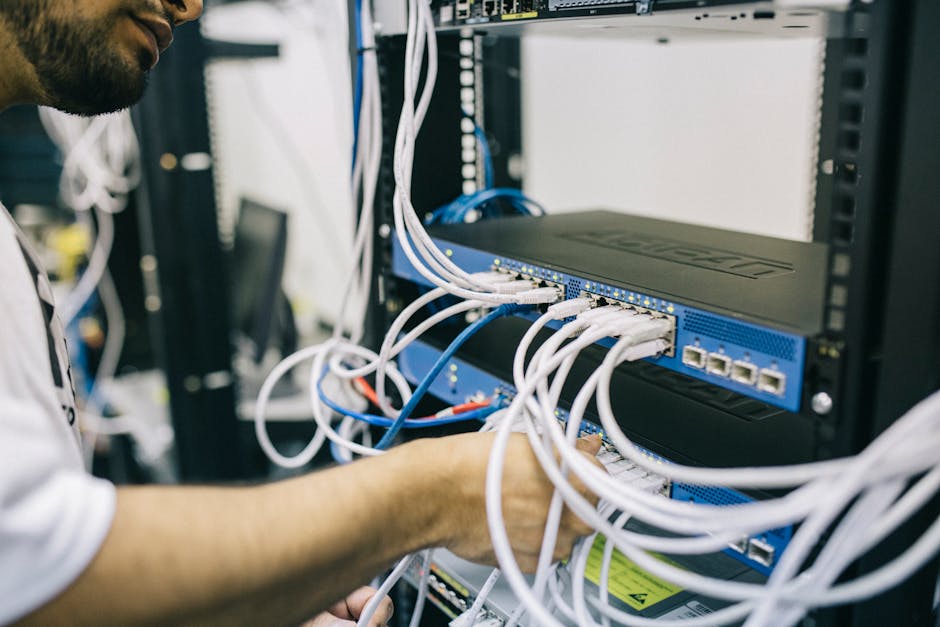 Image: An IT professional configuring network cables in a server rack, focusing on Ethernet connections.
- Rim Protection: Rudy Gobert's presence deters opponents from attacking the basket.
- Perimeter Defense: Jaden McDaniels' ability to guard multiple positions.
- Defensive Rebounding: Strong rebounding presence limits second-chance opportunities.
Timberwolves Weaknesses:
- Consistency: Defensive effort can wane at times.
- Communication: Breakdowns in communication lead to defensive lapses.
- Transition Defense: Vulnerable to fast-break points.
Trail Blazers Strengths:
- Individual Defenders: Matisse Thybulle's ability to disrupt opponents.
- Active Hands: Generating steals.
Trail Blazers Weaknesses:
- Rim Protection: Lacking a dominant rim protector.
- Defensive Rebounding: Struggles to secure rebounds.
- Overall Defensive Scheme: Deficiencies in defensive rotations and communication.
Opponent Shooting Efficiency Analysis
| Metric | Timberwolves | Trail Blazers | League Average | | ----------------------- | ------------ | ------------- | -------------- | | Opponent eFG% | 52.0% | 55.0% | 54.0% | | Opponent TS% | 55.0% | 58.0% | 57.0% | | Opponent 3P% | 35.0% | 37.0% | 36.0% |
Opponents shoot more efficiently against the Trail Blazers, particularly in Effective Field Goal Percentage (eFG%) and True Shooting Percentage (TS%), highlighting their defensive vulnerabilities.
 Image: Two professionals engage in a strategy meeting using digital tech for data analysis.
Rebounding Efficiency: Offensive and Defensive Rebound Rates
| Metric | Timberwolves | Trail Blazers | League Average | | ------------------------- | ------------ | ------------- | -------------- | | Offensive Rebound Rate | 28.0% | 25.0% | 26.0% | | Defensive Rebound Rate | 75.0% | 72.0% | 74.0% |
The Timberwolves exhibit superior rebounding efficiency, securing a higher percentage of both offensive and defensive rebounds. This provides them with more possessions and limits second-chance opportunities for opponents.
Forcing Turnovers: Steals and Blocks per Game
| Metric | Timberwolves | Trail Blazers | League Average | | --------------- | ------------ | ------------- | -------------- | | Steals per Game | 7.5 | 8.0 | 7.5 | | Blocks per Game | 6.0 | 4.5 | 5.0 |
The Trail Blazers generate slightly more steals per game, while the Timberwolves record more blocks, reflecting their rim protection with Rudy Gobert.
Individual Defensive Contributions: Key Defensive Players on Each Team (e.g., Jaden McDaniels, Matisse Thybulle)
- Jaden McDaniels (Timberwolves): McDaniels is a versatile defender capable of guarding multiple positions. His length and athleticism disrupt opponents.
- Rudy Gobert (Timberwolves): Gobert is a dominant rim protector, averaging 2.0 blocks per game and altering numerous shots.
- Matisse Thybulle (Trail Blazers): Thybulle is a disruptive defender, averaging 1.5 steals and 1.0 blocks per game. His defensive instincts are a key asset.
Defensive System Analysis: Zone vs. Man-to-Man, Switching Schemes
The Timberwolves primarily employ a man-to-man defensive scheme, leveraging Rudy Gobert's rim protection and Jaden McDaniels' perimeter defense. They occasionally switch on screens, but their communication and execution can be inconsistent. The Trail Blazers also primarily use man-to-man defense but struggle with rotations and communication, leading to breakdowns.
 Image: Professionals in a modern office discussing work with laptops and smartphones.
Real-world Example: Breakdown of a specific defensive sequence, highlighting strategy and execution
Timberwolves Example: In a defensive sequence, the Timberwolves might switch on a screen involving a smaller guard and a larger forward. Jaden McDaniels would effectively contain the guard, while Rudy Gobert would provide help defense at the rim, deterring any drives to the basket. This strategy relies on communication and quick rotations.
Trail Blazers Example: A typical defensive breakdown for the Trail Blazers might involve a missed rotation on a pick-and-roll, leading to an open shot for the opposing team. This highlights their struggles with communication and defensive awareness. Improving these areas is crucial for their defensive development.
System Integration: How Well Do the Pieces Fit?
System integration goes beyond individual talent. It's about how well players fit together, understand their roles, and execute within a cohesive team framework.
Coaching Philosophy and Impact on System Integration
The Timberwolves' coaching staff aims to create a balanced offensive and defensive system, emphasizing ball movement and defensive accountability. However, inconsistencies in execution suggest that the system isn't fully integrated. The Trail Blazers' coaching staff is focused on player development and establishing a team identity. They are experimenting with different lineups and schemes to find the right fit, but system integration is still a work in progress.
Roster Construction and Player Fit: Assessing Team Chemistry
The Timberwolves' roster features a mix of established stars and promising young players. The fit between Anthony Edwards, Karl-Anthony Towns (when healthy), and Rudy Gobert is crucial for their success. The Trail Blazers' roster is primarily composed of young players, creating a need for veteran leadership and improved team chemistry.
Ball Movement and Player Movement Analysis
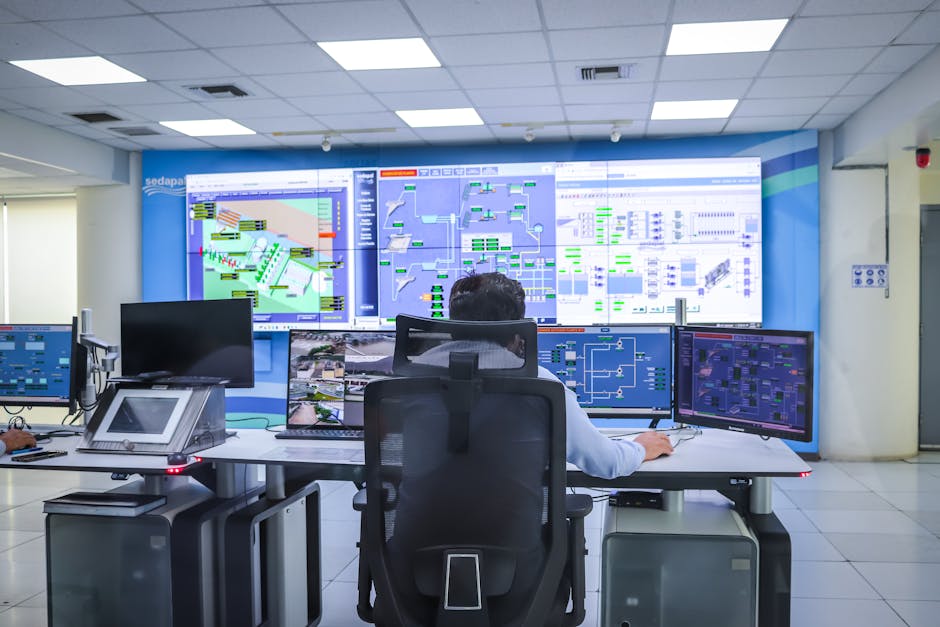 Image: Operator in a modern control room managing technological systems in El Agustino, Lima.
The Timberwolves exhibit decent ball movement, averaging 250 passes per game. However, their player movement can be stagnant at times, leading to predictable offensive sets. The Trail Blazers struggle with ball movement, averaging 230 passes per game, and their player movement is often limited, contributing to their offensive struggles.
- Timberwolves Passes Per Game: 250
- Trail Blazers Passes Per Game: 230
Off-Ball Offense and Defensive Rotations
The Timberwolves' off-ball offense relies on cuts and screens to create scoring opportunities. However, their execution can be inconsistent. Their defensive rotations are generally solid, but breakdowns in communication can lead to open shots for opponents. The Trail Blazers struggle with both off-ball offense and defensive rotations. Improving these areas is crucial for their overall team performance.
The Impact of Injuries and Player Availability on System Performance
Injuries have significantly impacted both teams. The Timberwolves have been affected by Karl-Anthony Towns' injuries, disrupting their offensive flow and defensive versatility. The Trail Blazers have experienced injuries to key players like Anfernee Simons and Scoot Henderson, hindering their development and system integration.
Advanced Metrics: Synergy Statistics (if available)
While specific synergy statistics are proprietary, general observations indicate that the Timberwolves' most effective offensive combinations involve Anthony Edwards and Karl-Anthony Towns (when healthy), leveraging their scoring versatility. The Trail Blazers' most promising combinations involve Anfernee Simons and Scoot Henderson, but their synergy is still developing.
Real-world Example: Analysis of how a specific player's skill set integrates (or doesn't) into the team's overall system
Timberwolves Example: Rudy Gobert's defensive prowess is a perfect fit for the Timberwolves' defensive system. His rim protection allows the team to be more aggressive on the perimeter, knowing that he can clean up any mistakes.
Trail Blazers Example: While Matisse Thybulle is a talented defender, his offensive limitations hinder his integration into the Trail Blazers' overall system. His lack of consistent shooting and ball-handling skills limit his effectiveness on the offensive end.
Advanced Analytics and Deeper Insights
Advanced analytics provide a more nuanced understanding of team performance, going beyond traditional box score statistics.
Net Rating Analysis: A Comprehensive View of Team Performance
The Timberwolves have a net rating of +2.2 (slightly above league average), indicating that they outscore opponents by an average of 2.2 points per 100 possessions. The Trail Blazers have a net rating of