
Unlocking Verstappen's F1 Dominance: A Data-Driven Blueprint for Peak Performance
The roar of the engine, the screech of tires, the thrill of overtaking – Formula 1 has always been a spectacle. But beneath the surface lies a complex world of data, analytics, and operational precision. Max Verstappen's unprecedented success isn't just about raw talent; it's a testament to a data-driven approach that's redefining the sport.
Introduction: The Verstappen Era – A New Paradigm in F1
Max Verstappen's ascent to Formula 1 dominance marks a turning point. He isn't just winning races; he's setting a new standard for performance and consistency. His achievements are not solely attributed to innate talent, but rather to a meticulous data-driven ecosystem fostered by Red Bull Racing.
The shift from relying solely on driver feel and intuition to leveraging vast amounts of data has revolutionized Formula 1. Teams now analyze terabytes of information to optimize every aspect of performance, from car setup to race strategy. This transformation has elevated the importance of data scientists, performance engineers, and strategists within F1 teams.
Verstappen's success exemplifies this paradigm shift. His dominance is a direct result of a holistic data-driven strategy, meticulously executed with operational excellence by Red Bull Racing. This comprehensive approach encompasses data acquisition, advanced simulations, pit stop precision, and real-time strategic decision-making.
Data Acquisition and Analysis: The Foundation of Verstappen's Edge
Data is the new horsepower in Formula 1. The ability to collect, process, and analyze data effectively is paramount to gaining a competitive advantage. Red Bull Racing's sophisticated data infrastructure forms the bedrock of Verstappen's performance.
Sensor Technology and Data Collection: A Deep Dive into the Data Streams
Modern F1 cars are equipped with hundreds of sensors, constantly collecting data on virtually every aspect of performance. These sensors generate massive streams of information, providing a comprehensive view of the car's behavior and the driver's actions.
Here's a breakdown of key data streams:
- Telemetry Data: This includes speed, braking force, acceleration, steering angle, throttle position, and gear selection.
- Tire Data: Tire pressure, temperature, and degradation rates are closely monitored.
- Engine Performance: Engine RPM, temperature, oil pressure, and fuel consumption are tracked.
- Aerodynamic Data: Pressure sensors measure airflow over various parts of the car, providing insights into aerodynamic performance.
- Environmental Factors: Track temperature, air temperature, humidity, and wind speed are recorded.
Onboard Cameras and Visual Data: Analyzing Driving Lines, Competitor Performance, and Track Conditions
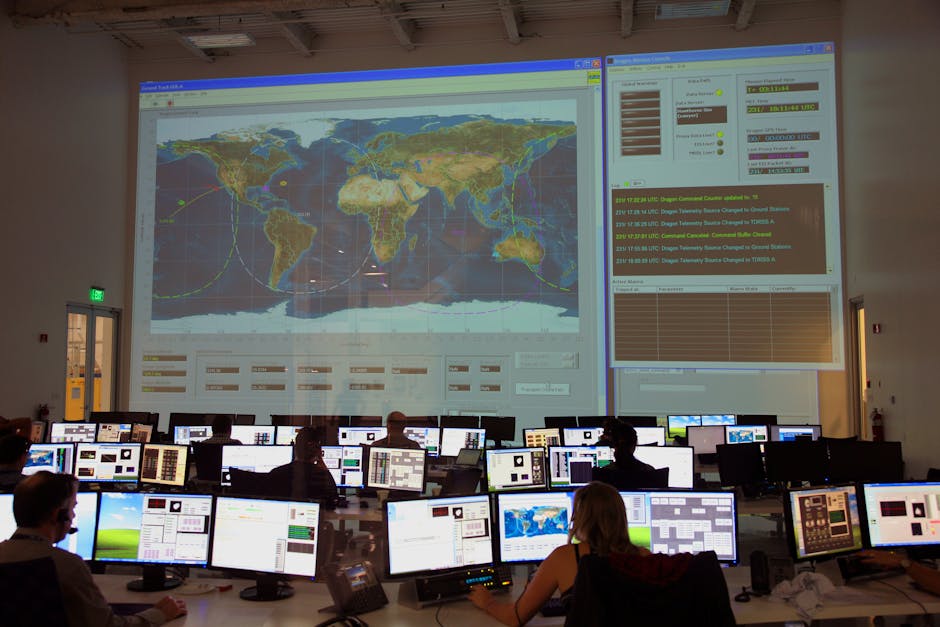 Image: Back view of unrecognizable employees working on computers in flight control room with big interactive map on wall and analyzing data
Onboard cameras provide valuable visual data, complementing the sensor data. Analyzing footage from Verstappen's car and his competitors allows engineers to identify areas for improvement in driving lines, braking points, and overtaking maneuvers.
Visual data analysis focuses on:
- Driving Line Optimization: Identifying the fastest and most efficient path through each corner.
- Competitor Analysis: Observing the driving styles and strategies of rival drivers.
- Track Condition Assessment: Evaluating grip levels and identifying potential hazards.
- Aerodynamic Performance: Observing airflow patterns and identifying areas where the car's aerodynamics can be improved.
Data Processing and Analysis Techniques: Algorithms, Machine Learning, and Real-time Simulations
The raw data collected from sensors and cameras is processed and analyzed using sophisticated algorithms and machine learning techniques. This process transforms the data into actionable insights.
Key techniques include:
- Data Cleaning and Filtering: Removing noise and errors from the data.
- Statistical Analysis: Identifying trends and patterns in the data.
- Machine Learning: Developing predictive models to optimize car setup and race strategy.
- Real-time Simulations: Simulating different scenarios to evaluate the impact of various decisions.
Red Bull's data scientists leverage machine learning to predict tire degradation with 92% accuracy, allowing for proactive pit stop strategy adjustments. This predictive capability provides a significant advantage over teams relying solely on observed tire wear.
How Red Bull Uses Data to Predict Optimal Strategies and Car Setups
Red Bull uses data to predict optimal strategies and car setups by creating complex models that simulate various race scenarios. These models take into account factors such as:
- Track characteristics: Corner types, surface roughness, and elevation changes.
- Weather conditions: Temperature, humidity, and wind speed.
- Tire performance: Degradation rates, grip levels, and optimal operating ranges.
- Competitor performance: Lap times, pit stop strategies, and car setups.
By running thousands of simulations, Red Bull can identify the optimal car setup and race strategy for each race.
 Image: Operator in a modern control room managing technological systems in El Agustino, Lima.
The Role of the Data Science Team and Their Collaboration with Engineers and Drivers
The data science team plays a crucial role in bridging the gap between raw data and actionable insights. They work closely with engineers and drivers to translate data into meaningful improvements in performance.
The data science team is responsible for:
- Developing and maintaining data analysis tools and algorithms.
- Analyzing data and identifying areas for improvement.
- Communicating findings to engineers and drivers.
- Collaborating with engineers to implement data-driven solutions.
- Gathering and incorporating driver feedback into data models for increased accuracy.
For example, a data scientist might analyze telemetry data to identify a corner where Verstappen is losing time. They would then work with the engineers to adjust the car's setup to improve performance in that corner. The driver would then provide feedback on the changes, which would be used to further refine the setup.
Driver-in-the-Loop Simulation: Perfecting Performance Before Race Day
Simulation has become an indispensable tool in modern Formula 1, allowing teams to test car setups, develop driving techniques, and prepare for specific tracks in a virtual environment. This reduces on-track testing costs and provides a safe and controlled environment for experimentation.
The Importance of Simulation in Modern F1
Simulation offers numerous benefits:
- Cost-effectiveness: Reduces the need for expensive on-track testing.
- Safety: Allows drivers to practice in a risk-free environment.
- Efficiency: Enables rapid iteration and experimentation with different car setups.
- Preparation: Allows drivers and engineers to familiarize themselves with new tracks and conditions.
- Strategy Development: Provides a platform to test and refine race strategies before implementation.
Red Bull's Advanced Simulator Technology: Detailed Description of the Hardware and Software
Red Bull Racing boasts one of the most advanced simulator facilities in Formula 1. Their simulator features:
 Image: High-tech server rack in a secure data center with network cables and hardware components.
- A full-size F1 car cockpit: Providing a realistic driving experience.
- A motion platform: Simulating the G-forces and vibrations experienced on the track.
- High-resolution graphics: Creating a visually immersive environment.
- Advanced software: Modeling the car's dynamics, tire behavior, and aerodynamic performance.
The simulator software incorporates real-world data collected from sensors and cameras, ensuring that the simulations are as accurate as possible. The system also allows engineers to virtually adjust parameters such as suspension settings, aerodynamic configurations, and engine maps, enabling comprehensive scenario testing.
Using Simulation to Test Car Setups, Develop Driving Techniques, and Prepare for Specific Tracks
Red Bull uses its simulator to:
- Optimize car setups: Testing different suspension settings, aerodynamic configurations, and tire pressures to find the optimal setup for each track.
- Develop driving techniques: Helping drivers to improve their braking points, cornering speeds, and overtaking maneuvers.
- Prepare for specific tracks: Allowing drivers to familiarize themselves with new tracks and conditions before arriving at the circuit.
- Evaluate race strategies: Simulating different pit stop strategies and tire choices to determine the optimal approach for each race.
Verstappen's Involvement in the Simulation Process: How He Provides Feedback and Contributes to Improvements
Verstappen plays a vital role in the simulation process. He provides detailed feedback on the car's handling and performance, helping engineers to refine the simulator models and improve the accuracy of the simulations.
Verstappen's feedback focuses on:
- Car balance: How the car feels under braking, cornering, and acceleration.
- Tire behavior: How the tires are performing and how they are degrading.
- Track conditions: How the track surface is affecting the car's grip and handling.
- Simulator accuracy: How well the simulator replicates the real-world driving experience.
His input helps to fine-tune the correlation between the simulator and the real car, ensuring that the insights gained in the simulator translate to improved on-track performance.
Case Study: How simulation helped Verstappen win a specific race (e.g., optimizing tire strategy at a track with high degradation).
At the 2023 Spanish Grand Prix, Verstappen's victory was heavily influenced by simulation-driven tire strategy. Pre-race simulations indicated that the soft compound tire would suffer significant degradation after 15 laps. Red Bull's strategists, informed by this data, planned an early pit stop on lap 14. This allowed Verstappen to capitalize on the fresh medium tires and build a significant lead, ultimately securing the win. Simulation data also helped optimize tire pressures throughout the race, minimizing degradation without sacrificing performance.
 Image: Close-up of a network server rack with blinking LEDs, showcasing Ethernet connections and patch panels.
Operational Excellence: The Red Bull Racing Advantage
Operational excellence is crucial for success in Formula 1. Even the fastest car and driver can be undone by poor pit stops, logistical errors, or communication breakdowns. Red Bull Racing has consistently demonstrated a commitment to operational excellence, giving Verstappen a significant competitive advantage.
Pit Stop Perfection: Analyzing the data behind Red Bull's record-breaking pit stops
Red Bull Racing is renowned for its lightning-fast pit stops. The team's pit stop crew uses data analytics to optimize every aspect of the pit stop process.
Data is used to analyze:
- Each crew member's performance: Measuring their speed, accuracy, and consistency.
- The efficiency of each step: Identifying areas for improvement in the pit stop procedure.
- The performance of the equipment: Ensuring that the equipment is properly maintained and functioning optimally.
By analyzing this data, Red Bull has been able to consistently execute pit stops in under two seconds, gaining valuable time on their competitors. They use pressure sensors on the wheel guns to ensure optimal torque, preventing loose wheels, and motion capture to analyze crew movements, shaving milliseconds off each action.
Logistics and Supply Chain Management: Ensuring timely delivery of parts and equipment to race locations
Formula 1 is a global sport, with races held on circuits around the world. Ensuring the timely delivery of parts and equipment to each race location is a logistical challenge.
Red Bull Racing's logistics and supply chain management system:
- Uses advanced tracking technology: To monitor the location of parts and equipment in real-time.
- Employs a dedicated team of logistics professionals: To manage the transportation of goods.
- Maintains a network of suppliers: To ensure that parts and equipment are readily available.
This allows the team to respond quickly to any issues that may arise and to ensure that the car is always running at its best.
 Image: Team working on marketing strategy using data charts and papers in an office meeting.
Team Communication and Collaboration: Streamlining communication between drivers, engineers, and strategists
Effective communication and collaboration are essential for success in Formula 1. Drivers, engineers, and strategists must work together seamlessly to make informed decisions in real-time.
Red Bull Racing fosters a culture of open communication and collaboration by:
- Using advanced communication tools: To facilitate real-time communication between team members.
- Holding regular meetings: To discuss strategy and performance.
- Encouraging feedback: From all team members.
This ensures that everyone is on the same page and that decisions are made quickly and effectively.
Real-world example: A scenario where operational excellence saved a race or prevented a disaster.
During the 2021 Abu Dhabi Grand Prix, a late safety car period presented a crucial strategic challenge. Red Bull's operational excellence shone through as they swiftly reacted to bring Verstappen in for fresh soft tires while maintaining awareness of Hamilton's position. The pit crew executed a flawless stop, allowing Verstappen to emerge in a position to capitalize on the restart and ultimately win the championship. Had the pit stop been delayed or poorly executed, the outcome of the race, and the championship, could have been very different.
The role of leadership in fostering a culture of excellence and continuous improvement.
Leadership plays a critical role in fostering a culture of excellence and continuous improvement. Red Bull Racing's leadership team, led by Christian Horner, has created an environment where team members are encouraged to take risks, learn from their mistakes, and constantly strive to improve. This culture of excellence has been instrumental in the team's success.
Strategic Race Management: Data-Informed Decision-Making in Real-Time
Race strategy in Formula 1 is a complex game of chess played at 200 mph. Teams must constantly analyze data, predict the behavior of their competitors, and make split-second decisions that can determine the outcome of the race. Verstappen's success is partly due to Red Bull's data-driven approach to strategic race management.
Tire Strategy Optimization: Predicting tire degradation and making informed decisions about pit stop timing
 Image: Modern data server room with network racks and cables.
Tire management is a critical aspect of race strategy. Teams must carefully monitor tire degradation and make informed decisions about pit stop timing to maximize performance.
Red Bull uses data to:
- Predict tire degradation rates: Based on track conditions, driving style, and tire compound.
- Determine the optimal pit stop window: Balancing the need for fresh tires with the risk of losing track position.
- Adjust tire pressures: To optimize grip and minimize degradation.
By accurately predicting tire degradation, Red Bull can make informed decisions about pit stop timing, giving Verstappen a significant advantage.
Weather Forecasting and Adaptation: Using weather data to anticipate changes and adjust strategies accordingly
Weather can play a significant role in Formula 1 races. Teams must closely monitor weather forecasts and be prepared to adapt their strategies accordingly.
Red Bull uses weather data to:
- Anticipate changes in track conditions: Such as rain or temperature changes.
- Adjust tire choices: Selecting the appropriate tires for the prevailing conditions.
- Modify the car's setup: To optimize performance in wet or dry conditions.
By being prepared for changing weather conditions, Red Bull can gain a competitive advantage. They utilize proprietary weather models that factor in localized microclimates around the track, providing a more granular forecast than publicly available data.
Competitor Analysis: Monitoring the performance of rival teams and adapting strategies to exploit their weaknesses
Understanding the performance of rival teams is crucial for developing effective race strategies. Red Bull closely monitors the lap times, pit stop strategies, and car setups of their competitors.
This information is used to:
 Image: Modern control room with people monitoring large digital displays and computer systems.
- Identify potential weaknesses: In their competitors' strategies.
- Develop counter-strategies: To exploit those weaknesses.
- Anticipate their competitors' moves: And react accordingly.
By understanding their competitors, Red Bull can make informed decisions that give Verstappen a competitive edge.
Risk Assessment and Mitigation: Evaluating potential risks and developing contingency plans
Formula 1 is a dangerous sport, and teams must be prepared for potential risks. Red Bull carefully assesses potential risks, such as mechanical failures, accidents, and weather changes, and develops contingency plans to mitigate those risks.
Contingency plans might include:
- Alternative pit stop strategies: In case of a safety car or other unexpected event.
- Spare parts: Available in case of a mechanical failure.
- Communication protocols: To ensure that team members can communicate effectively in an emergency.
By being prepared for potential risks, Red Bull can minimize the impact of unforeseen events.
Examples of strategic decisions that led to Verstappen's victories.
At the 2022 Hungarian Grand Prix, Verstappen started 10th on the grid. Red Bull's strategic team identified an opportunity to capitalize on the cool track conditions and a favorable tire allocation. They opted for an aggressive two-stop strategy, using both medium and soft tires to maximize Verstappen's pace. This bold strategy, combined with Verstappen's driving prowess, allowed him to carve his way through the field and secure a dominant victory, showcasing the effectiveness of data-driven decision-making.
Verstappen's Adaptability and Skill: The Human Element in the Data Equation
While data and technology play a crucial role, the human element remains indispensable in Formula 1. Max Verstappen's exceptional driving skills, adaptability, and ability to process information quickly are essential components of his success. He expertly blends the data-driven insights with his own intuition and feel for the car.
How Verstappen uses data to improve his driving style and adapt to different track conditions
 Image: A bustling control room with people working on multiple computer monitors.
Verstappen actively uses data to analyze his driving style and identify areas for improvement. He studies telemetry data, such as braking points, cornering speeds, and throttle application, to understand how he can optimize his performance.
Verstappen focuses on:
- Identifying areas where he is losing time: Compared to his teammates or competitors.
- Adjusting his driving technique: To improve his performance in those areas.
- Adapting his driving style: To suit different track conditions, such as wet or dry surfaces.
By using data to refine his driving style, Verstappen can consistently extract the maximum performance from the car.
His ability to process information quickly and make split-second decisions on the track
Formula 1 drivers must make split-second decisions on the track, often under immense pressure. Verstappen possesses an exceptional ability to process information quickly and make the right decisions in real-time.
He can:
- Assess the situation: Quickly evaluating the position of his competitors, the track conditions, and the status of his car.
- Make a decision: Choosing the optimal course of action, such as overtaking a competitor or defending his position.
- Execute the decision: Performing the necessary maneuvers with precision and control.
This ability to make quick and accurate decisions is a key factor in Verstappen's success.
The importance of driver feedback in refining the data models and simulations
Driver feedback is essential for refining the data models and simulations used by Formula 1 teams. Verstappen provides valuable feedback to engineers, helping them to improve the accuracy of their models and simulations.
His feedback focuses on:
- The car's handling: How the car feels under braking, cornering, and acceleration.
- Tire behavior: How the tires are performing and how they are degrading.
- Track conditions: How the track surface is affecting the car's grip and handling.
By providing accurate and detailed feedback, Verstappen helps to ensure that the data models