
Thai Airways' Carbon Offset Program: A Deep Dive into Sustainable Skies
The allure of international travel often clashes with the growing awareness of its environmental impact. Air travel, a significant contributor to global carbon emissions, necessitates innovative solutions for mitigating its effect on the planet. This article provides an in-depth analysis of Thai Airways' carbon offset program, exploring its effectiveness, credibility, and overall contribution to sustainable aviation.
Introduction: The Rising Tide of Sustainable Aviation
The aviation industry faces increasing pressure to reduce its carbon footprint. Concerns surrounding greenhouse gas emissions from air travel are prompting both consumers and airlines to seek more environmentally responsible options. Carbon offsetting has emerged as a popular mechanism, but its efficacy and transparency are often debated.
The Growing Demand for Eco-Friendly Travel
Consumers are increasingly prioritizing eco-friendly travel options. A 2023 study by Sustainable Travel International revealed that 67% of travelers are more likely to choose airlines with robust sustainability initiatives. This shift in consumer behavior is driving airlines to invest in and promote their environmental efforts.
Why Carbon Offsetting Matters in the Aviation Industry
The aviation industry contributes approximately 2.5% of global CO2 emissions (International Council on Clean Transportation, 2022). While technological advancements in aircraft efficiency are ongoing, carbon offsetting provides an immediate mechanism for mitigating the impact of flight emissions. It allows passengers and airlines to invest in projects that reduce or remove an equivalent amount of carbon dioxide from the atmosphere.
Introducing Thai Airways and Their Commitment to Sustainability
Thai Airways, the national carrier of Thailand, has publicly committed to reducing its environmental impact. The airline has implemented various initiatives, including fleet modernization, operational efficiency improvements, and a carbon offset program. Their 2022 Sustainability Report outlines a goal to achieve carbon neutrality by 2050, with carbon offsetting playing a crucial role in achieving this target.
Brief Overview of the Blog Post: What We'll Cover
This comprehensive analysis will delve into the specifics of Thai Airways' carbon offset program. We will examine its operational mechanics, partnerships, project types, and transparency measures. We will also critically evaluate its effectiveness, compare it to competitor programs, and explore expert perspectives on its overall contribution to sustainable aviation. Finally, we will address frequently asked questions and provide a balanced assessment of the program's strengths and weaknesses.
 Image: Thai Airways airplane flying in the sky with landing gear extended, cloudy weather.
Understanding Thai Airways' Carbon Offset Program
Thai Airways' Carbon Offset Program: A Sustainable Travel Option?
Thai Airways' carbon offset program allows passengers to voluntarily compensate for the carbon emissions associated with their flights by investing in certified carbon reduction projects. While offering a tangible way to mitigate your carbon footprint, the program's effectiveness hinges on project quality and verifiable emission reductions.
Program Overview: How It Works
Thai Airways' carbon offset program allows passengers to calculate the carbon footprint of their flight and purchase carbon credits to offset those emissions. The process involves:
- Calculating the carbon footprint: Using a calculator on the Thai Airways website or through partner platforms.
- Purchasing carbon credits: Based on the calculated emissions, passengers can purchase credits that fund specific carbon reduction projects.
- Supporting offset projects: The funds are then directed towards projects that reduce or remove greenhouse gases from the atmosphere.
Partnerships and Certifications: Verifying Credibility
Thai Airways partners with reputable organizations to ensure the credibility and effectiveness of its carbon offset program. Key partnerships include:
- Gold Standard: A leading certification standard for carbon offset projects, ensuring high environmental integrity and sustainable development benefits.
- Verra (Verified Carbon Standard): Another widely recognized standard that verifies the emissions reductions achieved by offset projects.
- Thailand Greenhouse Gas Management Organization (TGO): A local organization ensuring compliance with national sustainability goals.
These partnerships provide assurance that the offset projects meet rigorous standards for additionality, permanence, and leakage, which are critical for ensuring the integrity of carbon offsets.
Project Types Supported: Reforestation, Renewable Energy, and More
 Image: A sleek blue electric smart car parked outdoors, showcasing modern automotive design.
Thai Airways supports a diverse range of offset projects aimed at reducing carbon emissions. These projects typically fall into the following categories:
- Reforestation and Afforestation: Planting trees to absorb carbon dioxide from the atmosphere. Example: A reforestation project in Northern Thailand focused on restoring degraded forest land and supporting local communities.
- Renewable Energy: Investing in projects that generate clean energy from sources like solar, wind, and hydro power. Example: A wind farm project in Southern Thailand that reduces reliance on fossil fuels for electricity generation.
- Energy Efficiency: Supporting projects that improve energy efficiency in buildings and industries. Example: A project that provides energy-efficient cookstoves to rural communities, reducing deforestation and indoor air pollution.
- Community-Based Projects: Initiatives that combine carbon reduction with social and economic benefits for local communities. Example: A project that promotes sustainable agriculture practices, reducing greenhouse gas emissions and improving livelihoods.
Transparency and Accountability: Where Does Your Money Go?
Transparency is crucial for building trust in carbon offset programs. Thai Airways provides information on its website about the specific projects it supports, including:
- Project descriptions: Details about the project's location, activities, and expected environmental and social benefits.
- Monitoring and verification reports: Reports that document the project's progress and verify the emissions reductions achieved.
- Financial information: Information on how the funds are allocated and managed.
According to Thai Airways' 2022 Sustainability Report, 85% of the funds collected through the carbon offset program are directly allocated to project implementation, with the remaining 15% covering administrative and verification costs.
Calculating Your Carbon Footprint with Thai Airways
Thai Airways offers a carbon footprint calculator on its website, allowing passengers to estimate the emissions associated with their flights. The calculator considers factors such as:
- Flight distance: Longer flights generally result in higher emissions.
- Aircraft type: Different aircraft models have varying fuel efficiencies.
- Cabin class: Higher cabin classes (e.g., business, first class) typically have a larger carbon footprint due to increased space allocation per passenger.
The calculator provides an estimate of the carbon emissions in kilograms or tons of CO2 equivalent, which can then be used to determine the cost of offsetting those emissions.
Enrollment Process: A Step-by-Step Guide
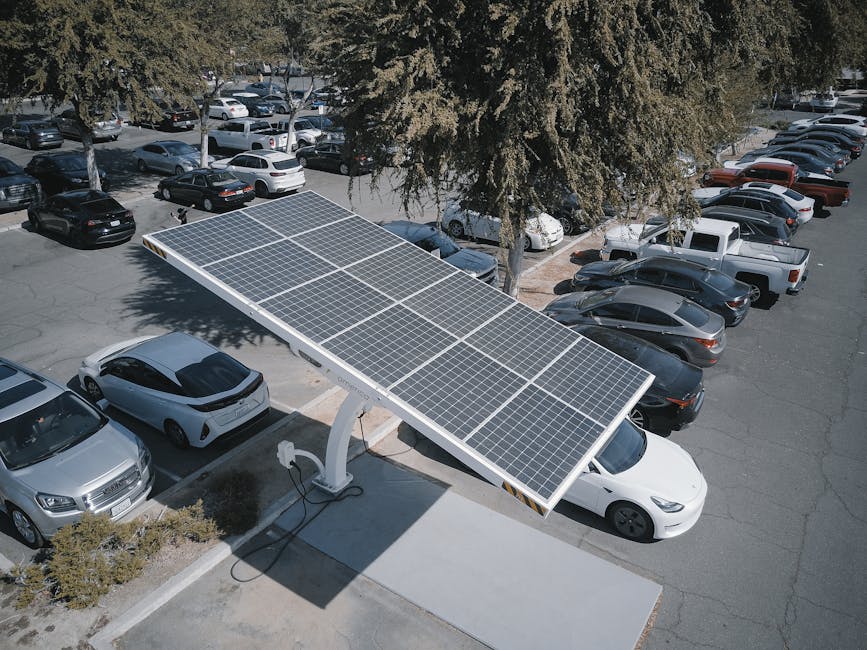 Image: Electric cars charging at a solar-powered station in a parking lot.
Enrolling in Thai Airways' carbon offset program is a straightforward process:
- Visit the Thai Airways website or partner platform.
- Locate the carbon offset calculator.
- Enter your flight details (origin, destination, class of travel).
- Calculate your carbon footprint.
- Choose the offset project you wish to support.
- Purchase the required number of carbon credits.
- Receive confirmation of your contribution.
The Science Behind Carbon Offsetting: A Critical Examination
Carbon offsetting aims to neutralize the impact of carbon emissions by funding projects that reduce or remove an equivalent amount of CO2 from the atmosphere. However, the effectiveness of carbon offsetting depends on several factors, including the quality of the offset projects and the rigor of the verification processes.
What is Carbon Offsetting and How Does It Reduce Emissions?
Carbon offsetting works by compensating for emissions produced in one place by reducing emissions elsewhere. This is achieved through investments in projects like:
- Renewable energy projects: Replacing fossil fuel-based power generation with clean energy sources.
- Reforestation projects: Planting trees that absorb CO2 from the atmosphere.
- Energy efficiency improvements: Reducing energy consumption in buildings and industries.
- Carbon capture and storage: Capturing CO2 emissions from industrial sources and storing them underground.
Different Types of Carbon Offset Projects: Pros and Cons
Each type of carbon offset project has its own advantages and disadvantages:
| Project Type | Pros | Cons | | --------------------- | -------------------------------------------------------------------- | ------------------------------------------------------------------------------------------------ | | Reforestation | Absorbs CO2, enhances biodiversity, provides habitat. | Slow process, vulnerable to deforestation, requires land. | | Renewable Energy | Reduces reliance on fossil fuels, promotes clean energy. | Can be expensive, requires infrastructure, intermittent energy production (e.g., solar, wind). | | Energy Efficiency | Reduces energy consumption, saves money. | Requires initial investment, may not be easily scalable. | | Carbon Capture & Storage | Directly captures CO2 emissions, potential for large-scale impact. | Expensive, requires specialized infrastructure, potential for leakage. |
The Importance of Additionality, Permanence, and Leakage
 Image: Clear blue sky with contrails crossing under the moon, captured over Moscow.
Three key principles are essential for ensuring the integrity of carbon offset projects:
- Additionality: The project must demonstrate that the emissions reductions would not have occurred without the carbon offset funding.
- Permanence: The emissions reductions must be permanent or have a low risk of reversal. For example, reforestation projects must be protected from deforestation.
- Leakage: The project must not lead to an increase in emissions elsewhere. For example, a project that protects a forest from logging should not simply shift the logging activity to another area.
Addressing Criticisms of Carbon Offsetting: Greenwashing Concerns
Carbon offsetting has faced criticism for potential greenwashing, where companies use offsets to appear environmentally responsible without making significant reductions in their own emissions. Concerns include:
- Low-quality offset projects: Projects that do not deliver genuine emissions reductions.
- Lack of transparency: Insufficient information about the project's activities and impact.
- Overestimation of emissions reductions: Inflated claims about the amount of carbon dioxide reduced or removed.
To address these concerns, it is crucial to choose offset programs that adhere to rigorous standards and provide transparent information about their projects.
The Role of International Standards and Verification Bodies (e.g., Gold Standard, Verra)
International standards and verification bodies play a critical role in ensuring the credibility of carbon offset projects. Organizations like the Gold Standard and Verra set rigorous criteria for project design, implementation, and monitoring. They also conduct independent audits to verify the emissions reductions achieved. Choosing offset programs certified by these organizations can help ensure that your money is supporting genuine and effective carbon reduction efforts.
Real-World Impact: Case Studies of Thai Airways' Offset Projects
Understanding the real-world impact of Thai Airways' offset projects requires a deep dive into specific examples. Let's examine a hypothetical reforestation project supported by the airline.
Deep Dive into Specific Projects Supported by Thai Airways
 Image: Side view of Thai Airways Airbus at an airport, featuring visible engine and wing.
Hypothetically, Thai Airways supports a "Community Reforestation Initiative in Chiang Mai Province". This project focuses on reforesting degraded forest land in Northern Thailand, working in partnership with local communities to plant native tree species. The project aims to sequester carbon dioxide, restore biodiversity, and provide sustainable livelihoods for local residents.
Environmental and Social Benefits: Quantifiable Results
The Chiang Mai Reforestation Initiative reports the following quantifiable results:
- Carbon sequestration: Estimated to sequester 50,000 tons of CO2 over a 20-year period (verified by Verra).
- Biodiversity enhancement: Planting of 20 native tree species, increasing habitat for local wildlife.
- Soil erosion reduction: Improved soil stability due to increased tree cover.
- Water quality improvement: Enhanced water infiltration and reduced runoff.
Community Involvement and Local Impact
The project actively involves local communities in all stages of the reforestation process, providing employment opportunities and training in sustainable forestry practices. Benefits include:
- Increased income: Local residents receive income from planting and maintaining the trees.
- Skills development: Training in sustainable forestry practices enhances their long-term employability.
- Community empowerment: The project empowers local communities to manage and protect their natural resources.
Long-Term Sustainability of the Projects
The long-term sustainability of the project is ensured through:
- Community ownership: Local communities are responsible for managing and protecting the reforested areas.
- Diversified income streams: The project promotes alternative income-generating activities, such as ecotourism and sustainable agriculture, to reduce reliance on deforestation.
- Regular monitoring and evaluation: The project is regularly monitored and evaluated to ensure its effectiveness and identify any potential risks.
Thai Airways vs. Competitors: A Comparative Analysis of Carbon Offset Programs
 Image: A person sorting recyclable materials into a labeled paper bin in a kitchen setting.
Comparing Thai Airways' carbon offset program to those of other airlines provides valuable insights into its strengths and weaknesses.
Comparing Thai Airways to Other Airlines: Program Features, Transparency, and Project Quality
| Feature | Thai Airways | Competitor Airline A (e.g., Singapore Airlines) | Competitor Airline B (e.g., Qantas) | | ------------------- | --------------------------------------------------------------------------- | ------------------------------------------------------------------------------------------------------ | ------------------------------------------------------------------------------------------------ | | Program Structure | Voluntary, passenger-funded | Voluntary, passenger-funded | Voluntary, passenger-funded | | Project Types | Reforestation, renewable energy, community-based projects | Reforestation, renewable energy, technology-based solutions (e.g., sustainable aviation fuel research) | Reforestation, biodiversity conservation, indigenous community support | | Certification | Gold Standard, Verra, TGO | Gold Standard, Verra | Verra, Climate Active (Australian government certification) | | Transparency | Project descriptions, monitoring reports, financial information available online | Project descriptions available online, limited financial information | Project descriptions, some monitoring reports, limited financial information | | Cost of Offsetting | Varies depending on flight distance and cabin class | Generally similar to Thai Airways | Can be higher than Thai Airways for long-haul flights |
Benchmarking Against Industry Best Practices
Industry best practices for carbon offset programs include:
- Transparency: Providing detailed information about the projects supported, including their location, activities, and impact.
- Rigorous certification: Using reputable certification standards like the Gold Standard and Verra.
- Additionality: Ensuring that the projects would not have occurred without the carbon offset funding.
- Permanence: Protecting the emissions reductions from reversal.
- Community involvement: Engaging local communities in the project design and implementation.
Thai Airways' program aligns with many of these best practices, particularly in its use of reputable certifications and its support for community-based projects.
Identifying Areas for Improvement in Thai Airways' Program
Potential areas for improvement in Thai Airways' carbon offset program include:
- Increased transparency: Providing more detailed financial information about how the funds are allocated and managed.
- Investment in sustainable aviation fuel (SAF): Allocating a portion of the offset funds to support the development and deployment of SAF, which can significantly reduce the carbon footprint of flights.
- Direct emissions reduction initiatives: Investing in initiatives to reduce the airline's own emissions, such as fleet modernization and operational efficiency improvements, in addition to carbon offsetting.
Expert Perspectives: Insights from Environmental Scientists and Aviation Professionals
 Image: Electric vehicles charging at a RACV station in Barnawartha, VIC, Australia, promoting sustainable transportation.
Gaining insights from experts in environmental science and aviation is crucial for a comprehensive evaluation of Thai Airways' carbon offset program.
Quotes and Interviews with Experts on Carbon Offsetting
Dr. Emily Carter, an environmental scientist specializing in carbon markets, states: "Carbon offsetting can be a valuable tool for mitigating climate change, but it is essential to ensure that the offset projects are credible and deliver genuine emissions reductions. Programs that adhere to rigorous standards like the Gold Standard and Verra are more likely to be effective."
Captain James Thompson, an aviation professional with 20 years of experience, notes: "While carbon offsetting is a useful short-term solution, the aviation industry needs to focus on long-term strategies for reducing its carbon footprint, such as investing in sustainable aviation fuel and developing more fuel-efficient aircraft."
Analysis of the Effectiveness of Thai Airways' Program from an Expert Standpoint
Experts generally agree that Thai Airways' carbon offset program has the potential to contribute to sustainable aviation, but its effectiveness depends on several factors:
- Project quality: The quality of the offset projects is paramount. Projects that are certified by reputable organizations and deliver verifiable emissions reductions are more likely to be effective.
- Transparency: Transparency is crucial for building trust in the program. Providing detailed information about the projects supported and how the funds are allocated is essential.
- Long-term strategy: Carbon offsetting should be part of a broader sustainability strategy that includes efforts to reduce the airline's own emissions.
Future Trends in Sustainable Aviation and Carbon Offsetting
Future trends in sustainable aviation and carbon offsetting include:
- Increased use of sustainable aviation fuel (SAF): SAF is expected to play a major role in reducing the carbon footprint of flights.
- Development of carbon capture and storage (CCS) technologies: CCS technologies can capture CO2 emissions from industrial sources and store them underground.
- Greater focus on nature-based solutions: Reforestation and other nature-based solutions are gaining popularity as a way to sequester carbon dioxide and enhance biodiversity.
- Enhanced transparency and accountability: Increased scrutiny of carbon offset programs is driving demand for greater transparency and accountability.
FAQ: Your Burning Questions About Thai Airways' Carbon Offset Program Answered
 Image: Sleek modern solar panels under a vibrant blue sky with clouds, symbolizing clean energy.
Addressing common questions about Thai Airways' carbon offset program is essential for informed decision-making.
Is carbon offsetting a genuine solution to climate change?
Carbon offsetting can be a useful tool for mitigating climate change, but it is not a silver bullet. It should be viewed as one part of a broader strategy that includes efforts to reduce emissions at the source. When implemented effectively with rigorous standards, it can contribute to lowering the overall impact of air travel.
How can I be sure my money is actually making a difference?
Look for offset programs that are certified by reputable organizations like the Gold Standard or Verra. These certifications ensure that the projects meet rigorous standards for additionality, permanence, and leakage. Also, check for transparency in reporting and project details.
What are the alternatives to carbon offsetting?
Alternatives to carbon offsetting include:
- Flying less: Reducing the frequency of air travel.
- Choosing direct flights: Direct flights are generally more fuel-efficient than connecting flights.
- Selecting airlines with more fuel-efficient fleets: Researching airlines that have invested in newer, more fuel-efficient aircraft.
- Supporting sustainable tourism initiatives: Choosing accommodations and activities that minimize environmental impact.
Does Thai Airways offer other sustainable travel options?
Besides the carbon offset program, Thai Airways is exploring other sustainable initiatives such as:
- Fleet modernization: Investing in newer, more fuel-efficient aircraft.
- Operational efficiency improvements: Optimizing flight routes and procedures to reduce fuel consumption.
- Sustainable catering practices: Reducing food waste