
Smart Home, Dumb Grid? Power Outage Survival Guide for the Tech-Savvy
Introduction: The Modern Grid and Your Smart Home Vulnerability
The allure of a smart home – automated convenience, enhanced security, and optimized energy usage – hinges entirely on a reliable power supply. But what happens when the lights go out? Are you prepared for the inevitable power outage or increasing grid instability?
Briefly define a 'Smart Home' for the target audience.
A smart home integrates technology to automate and remotely control various systems and appliances, including lighting, security, entertainment, and HVAC. These systems are typically interconnected via a central hub or network, allowing for seamless operation and data exchange.
Highlight the increasing reliance on a stable power grid.
Smart homes are fundamentally dependent on a stable power grid. Every connected device, from security cameras to smart thermostats, requires electricity to function. This dependence creates a single point of failure: a power outage can render your smart home features useless, or even create security vulnerabilities.
Introduce the rising frequency and severity of power outages and grid instability (cite sources).
Power outages are no longer rare occurrences. A 2023 report by the U.S. Energy Information Administration (EIA) indicated a 64% increase in major power outages over the past decade. Furthermore, the average duration of these outages has risen by 38%, leaving homeowners without power for extended periods. Factors such as extreme weather events, aging infrastructure, and cyberattacks contribute to this growing problem.
Explain the cascading impact of power loss on smart home functionality.
The impact of a power outage on a smart home is far-reaching. Security systems can fail, leaving your property vulnerable. Smart lighting goes dark, creating safety hazards. Communication systems are disrupted, isolating you from emergency services and loved ones. Even basic tasks like cooking and refrigeration become challenging.
Thesis statement: Proactive planning is crucial for maintaining comfort, security, and productivity during power disruptions.
To mitigate the risks associated with power outages, proactive planning is essential. By implementing backup power solutions, prioritizing critical devices, and establishing emergency protocols, homeowners can maintain comfort, security, and productivity during power disruptions and ensure their smart homes remain functional, even when the grid fails.
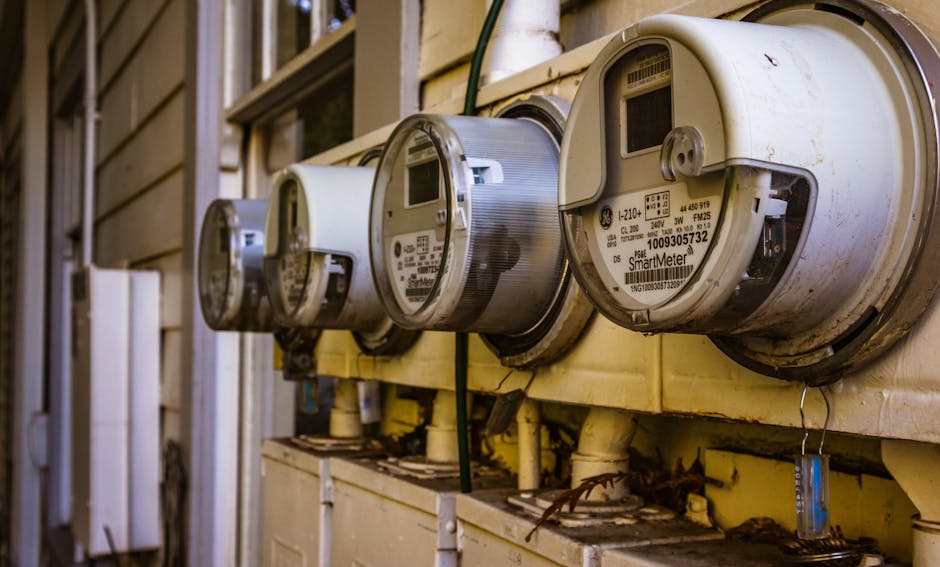 Image: Image of multiple smart electricity meters installed on a residential exterior wall, showing environmental adaptation.
Understanding the Risks: Why Power Outages Are Becoming More Common
Several factors are converging to increase the frequency and severity of power outages, making preparedness more critical than ever.
Aging Infrastructure: The Problem with Legacy Power Grids
Many power grids in developed countries are decades old, struggling to meet modern demands. According to the American Society of Civil Engineers (ASCE) 2021 Infrastructure Report Card, the U.S. power grid received a "C-" grade. This aging infrastructure is prone to failures, leading to more frequent and prolonged outages.
- Outdated Equipment: Transformers, substations, and transmission lines are reaching the end of their lifespan.
- Insufficient Capacity: The grid is struggling to handle the increasing demand from electric vehicles, smart appliances, and data centers.
- Lack of Investment: Insufficient funding for upgrades and maintenance exacerbates the problem.
Climate Change: Extreme Weather Events and Grid Strain
Climate change is driving more frequent and intense extreme weather events, putting immense strain on power grids.
- Hurricanes and Tropical Storms: High winds and flooding can damage power lines and substations.
- Heat Waves: Increased demand for air conditioning can overload the grid, leading to brownouts and blackouts.
- Wildfires: Can cause widespread damage to power infrastructure, especially in forested areas.
Cybersecurity Threats: Vulnerabilities in Grid Management Systems
The increasing reliance on digital technology in grid management systems creates new vulnerabilities to cyberattacks. A successful attack could disrupt power supply on a massive scale.
- Ransomware Attacks: Targeting critical infrastructure can paralyze operations and demand large payouts.
- State-Sponsored Attacks: Nation-states may target power grids to disrupt economic activity or national security.
- Vulnerability Exploitation: Hackers can exploit weaknesses in software and hardware to gain control of grid systems.
Increased Demand: The Strain of Electric Vehicles and Smart Appliances
 Image: Scrabble tiles with Cyrillic letters spelling 'верь' displayed on a wooden surface.
The proliferation of electric vehicles (EVs) and smart appliances is placing additional strain on the power grid.
- EV Charging: High-power EV chargers can significantly increase electricity demand, especially during peak hours.
- Smart Appliances: While energy-efficient, the sheer number of smart appliances adds to overall energy consumption.
- Data Centers: The growing demand for data storage and processing requires massive amounts of electricity.
Geopolitical Instability: The impact on energy supply chains
Global political events can significantly impact energy supply chains, leading to price volatility and potential disruptions.
- Sanctions: Economic sanctions on energy-producing countries can reduce supply and increase prices.
- Conflicts: Armed conflicts can disrupt energy production and transportation, leading to shortages.
- Trade Wars: Trade disputes can impact the flow of energy resources, affecting availability and cost.
Essential Backup Power Solutions for Smart Homes
Investing in backup power solutions is a critical step in preparing your smart home for power outages.
Uninterruptible Power Supplies (UPS): Choosing the Right Size and Type
An Uninterruptible Power Supply (UPS) provides immediate, short-term power to critical devices during an outage. It's essential for protecting sensitive electronics and preventing data loss.
- Sizing: Calculate the total wattage of the devices you want to protect and choose a UPS with sufficient capacity. Aim for at least 20% extra capacity for future expansion.
- Types:
- Standby UPS: Switches to battery power when a power outage is detected. Suitable for basic devices like computers and routers.
- Line-Interactive UPS: Regulates voltage fluctuations and provides battery backup. Ideal for sensitive electronics and home entertainment systems.
- Online UPS: Continuously provides power from the battery, offering the highest level of protection. Recommended for critical equipment like servers and medical devices.
- Example: A smart home with a security system (50W), router (15W), and smart hub (10W) would require a UPS with a capacity of at least 100W (including headroom).
Generators: Whole-House vs. Portable Options and Fuel Considerations
Generators provide longer-term backup power, allowing you to run essential appliances and systems during extended outages.
 Image: Cyrillic alphabet tiles spelling a word on a smooth wooden surface.
- Whole-House Generators: Automatically start when a power outage is detected and can power the entire home. Require professional installation and a connection to a natural gas or propane line.
- Pros: Seamless operation, whole-house coverage.
- Cons: Higher upfront cost, requires professional installation.
- Portable Generators: Require manual start-up and can be moved to different locations. Run on gasoline, propane, or diesel.
- Pros: Lower upfront cost, portability.
- Cons: Manual operation, require fuel storage, can be noisy.
- Fuel Considerations:
- Gasoline: Readily available but has a shorter shelf life and requires stabilization.
- Propane: Longer shelf life and cleaner burning but requires a propane tank.
- Diesel: More efficient and durable but can be noisy and produce more emissions.
Solar Power with Battery Storage: A Sustainable and Resilient Solution
Solar power with battery storage offers a sustainable and resilient backup power solution. Solar panels generate electricity during the day, which can be stored in batteries for use during power outages or at night.
- Benefits:
- Renewable Energy: Reduces reliance on fossil fuels and lowers your carbon footprint.
- Energy Independence: Provides a reliable power source during grid outages.
- Cost Savings: Reduces electricity bills and can generate income through net metering.
- Considerations:
- Upfront Cost: Solar panels and batteries require a significant initial investment.
- Space Requirements: Solar panels require ample roof space with good sun exposure.
- Battery Capacity: Choose a battery system with sufficient capacity to meet your backup power needs.
Power Inverters: Converting DC to AC for Critical Devices
Power inverters convert direct current (DC) electricity from batteries or solar panels into alternating current (AC) electricity, which is required by most household appliances.
- Types:
- Pure Sine Wave Inverters: Provide clean, stable power that is suitable for sensitive electronics.
- Modified Sine Wave Inverters: Less expensive but may not be compatible with all devices.
- Applications:
- Running small appliances like laptops, phones, and lights.
- Powering critical medical equipment.
- Providing backup power for security systems.
Microgrids: Creating a Self-Sufficient Power Ecosystem (Expert Real-world Example)
A microgrid is a localized energy grid that can operate independently from the main power grid. It typically includes a combination of renewable energy sources, battery storage, and smart grid technologies.
- Benefits:
- Increased Resilience: Provides a reliable power supply during grid outages.
- Reduced Energy Costs: Optimizes energy consumption and reduces reliance on the grid.
- Environmental Sustainability: Promotes the use of renewable energy sources.
- Example: The Stone Edge Farm microgrid in Sonoma, California, combines solar power, battery storage, and a smart microgrid controller to provide 100% renewable energy to the farm. During the 2017 California wildfires, the microgrid allowed the farm to operate independently from the grid, providing critical services to the community.
Smart Home Devices: Prioritizing Functionality During Power Outages
Not all smart home devices are created equal when the power goes out. Prioritize the functionality of critical systems.
 Image: Artistic display of Scrabble tiles spelling the word 'For' on a dark background.
Security Systems: Maintaining Surveillance and Alarm Functionality
Security systems are crucial for protecting your home during power outages.
- Battery Backup: Ensure your security system has a battery backup to maintain functionality during outages.
- Cellular Backup: Consider a system with cellular backup to stay connected to the monitoring center even if the internet is down.
- Remote Monitoring: Choose a system that allows you to monitor your home remotely via a mobile app.
Lighting: Implementing Emergency Lighting Solutions
Emergency lighting is essential for safety during power outages.
- Battery-Powered Lights: Keep flashlights, lanterns, and battery-powered LED lights readily available.
- Automatic Emergency Lights: Install automatic emergency lights that turn on when the power goes out.
- Smart Bulbs with Battery Backup: Utilize smart bulbs with integrated battery backup to provide temporary lighting.
Communication: Staying Connected with Cellular Backup and Satellite Communication
Communication is vital for staying informed and connected during power outages.
- Cellular Backup: Use a cellular hotspot or smartphone as a backup internet connection.
- Satellite Communication: Consider a satellite phone or communication device for areas with unreliable cellular service.
- Battery-Powered Radio: Keep a battery-powered radio on hand to receive emergency broadcasts.
HVAC: Efficient Heating and Cooling Strategies for Reduced Power Consumption
HVAC systems consume a significant amount of power. Implement strategies to reduce power consumption during outages.
- Programmable Thermostats: Set your thermostat to a higher temperature in the summer and a lower temperature in the winter to conserve energy.
- Zone Control: Use zone control systems to heat or cool only the occupied areas of your home.
- Passive Heating and Cooling: Utilize natural ventilation and shading to reduce reliance on HVAC systems.
 Image: Minimalist photo of keyboard tiles spelling 'DOWNLOAD' on a red background.
Smart Appliances: Identifying Critical Appliances and Power Management Techniques
Smart appliances can be managed to optimize power consumption during outages.
- Prioritize Critical Appliances: Identify essential appliances like refrigerators, freezers, and medical equipment.
- Power Management: Use smart plugs and switches to remotely control and prioritize power to critical appliances.
- Energy Monitoring: Monitor energy consumption to identify and reduce unnecessary power usage.
Advanced Strategies: Optimizing Your Smart Home for Resilience
Beyond basic backup power, advanced strategies can significantly improve your smart home's resilience.
Energy Monitoring and Management Systems: Identifying and Reducing Power Consumption
Energy monitoring and management systems provide valuable insights into your energy consumption, allowing you to identify and reduce unnecessary power usage.
- Real-Time Monitoring: Track energy consumption in real-time to identify energy hogs.
- Historical Data: Analyze historical data to identify trends and patterns in energy usage.
- Automated Controls: Use automated controls to optimize energy consumption based on real-time conditions.
Smart Outlets and Switches: Remote Control and Power Prioritization
Smart outlets and switches allow you to remotely control and prioritize power to different devices and appliances.
- Remote Control: Turn devices on or off remotely to conserve energy.
- Power Prioritization: Prioritize power to critical devices during outages.
- Scheduling: Schedule devices to turn on or off automatically based on your needs.
Home Automation Integration: Automating Power Management During Outages
 Image: Scrabble tiles spelling 'Happiness' in Cyrillic on a light wooden surface.
Home automation integration allows you to automate power management during outages, ensuring that critical systems remain operational.
- Automated Switching: Automatically switch to backup power when a power outage is detected.
- Load Shedding: Automatically reduce power consumption by turning off non-essential devices.
- Alerts and Notifications: Receive alerts and notifications when a power outage occurs or when battery levels are low.
Load Shedding: Automatically Reducing Power Consumption During Grid Instability
Load shedding is a technique for automatically reducing power consumption during grid instability. This can help prevent blackouts and maintain grid stability.
- Automated Control: Automatically turn off non-essential devices when the grid is overloaded.
- Prioritization: Prioritize power to critical devices and systems.
- User Control: Allow users to override load shedding settings if necessary.
Demand Response Programs: Participating in Grid Stabilization Initiatives
Demand response programs allow you to participate in grid stabilization initiatives by reducing your energy consumption during peak demand periods.
- Incentives: Receive financial incentives for reducing your energy consumption during peak demand.
- Automated Control: Allow your utility company to remotely control your smart thermostat or other appliances to reduce energy consumption.
- Grid Stabilization: Help stabilize the grid and prevent blackouts.
Preparing Your Family: Emergency Plans and Procedures
Technical solutions are only part of the equation. A well-prepared family is equally crucial.
Creating a Family Emergency Plan: Communication, Evacuation, and Shelter-in-Place Strategies
A family emergency plan is essential for ensuring everyone knows what to do during a power outage.
 Image: Scrabble tiles forming text 'open for' on a blue background with copy space.
- Communication: Establish a communication plan to stay in touch with family members.
- Evacuation: Identify evacuation routes and meeting points in case you need to leave your home.
- Shelter-in-Place: Designate a safe room in your home where you can shelter in place during a power outage.
Assembling an Emergency Kit: Essential Supplies for Power Outages
An emergency kit should include essential supplies for surviving a power outage.
- Water: Store at least one gallon of water per person per day.
- Food: Stock up on non-perishable food items.
- First Aid Kit: Include essential medical supplies and medications.
- Flashlights and Batteries: Keep flashlights and extra batteries on hand.
- Radio: A battery-powered or hand-crank radio to receive emergency broadcasts.
Training Family Members on Backup Power Systems and Safety Procedures
Training family members on backup power systems and safety procedures is crucial for ensuring everyone knows how to operate the equipment safely.
- Generator Safety: Teach family members how to safely operate a generator.
- UPS Operation: Explain how to use a UPS to protect sensitive electronics.
- Emergency Procedures: Review emergency procedures and evacuation routes.
Establishing Communication Protocols: Staying Connected Without Internet Access
Communication protocols are essential for staying connected without internet access.
- Cellular Backup: Use a cellular hotspot or smartphone as a backup internet connection.
- Satellite Communication: Consider a satellite phone or communication device for areas with unreliable cellular service.
- Two-Way Radios: Use two-way radios to communicate with family members in the immediate area.
Practicing Emergency Drills: Ensuring Preparedness and Coordination
Emergency drills help ensure that everyone knows what to do during a power outage.
 Image: Scrabble tiles spelling 'reports' on a wooden desk, ideal for office or business themes.
- Simulate Outages: Practice turning off the power and using backup power systems.
- Evacuation Drills: Practice evacuating your home and meeting at designated locations.
- Communication Drills: Practice using communication protocols to stay in touch with family members.
FAQ: Addressing Common Concerns About Smart Homes and Power Outages
Here are answers to some frequently asked questions about smart homes and power outages.
How long will my UPS last during a power outage?
The runtime of a UPS depends on its capacity and the power consumption of the connected devices. A typical home UPS can provide power for 5-30 minutes, allowing you to safely shut down your devices.
What size generator do I need for my smart home?
The size of the generator you need depends on the total wattage of the appliances and systems you want to power. A whole-house generator typically requires 5,000 to 10,000 watts, while a portable generator can range from 2,000 to 7,000 watts.
Is solar power with battery storage a cost-effective solution?
Solar power with battery storage can be a cost-effective solution in the long run, especially in areas with high electricity costs or frequent power outages. The initial investment can be significant, but the long-term savings and energy independence can make it worthwhile.
How can I protect my smart home devices from power surges?
Use surge protectors on all sensitive electronic devices. Consider installing a whole-house surge protector at your electrical panel to protect your entire home from power surges.
What are the signs of an impending power outage?
Signs of an impending power outage include flickering lights, voltage fluctuations, and unusual noises from electrical equipment. Stay informed about weather forecasts and utility company alerts.
How do I safely operate a generator?
Operate generators outdoors in a well-ventilated area to prevent carbon monoxide poisoning. Never connect a generator directly to your home's electrical system without a transfer switch.