
Ski Mountaineering: Sustainable Energy for Peak Performance & Environmental Responsibility
Ski mountaineering, a thrilling blend of skiing and mountaineering, offers unparalleled access to pristine alpine environments. However, this pursuit carries an environmental footprint. This guide provides actionable strategies to minimize that impact, ensuring the sport's future and preserving the mountains we love.
Introduction: The Convergence of Ski Mountaineering and Sustainability
Ski mountaineering is experiencing a surge in popularity, yet this growth necessitates a conscientious approach to protect the fragile alpine ecosystems that define the sport. By integrating sustainable practices into our ski mountaineering endeavors, we can minimize our environmental impact, ensuring the longevity of the sport and the preservation of these breathtaking landscapes for future generations.
The Growing Popularity of Ski Mountaineering and its Environmental Impact
Ski mountaineering, also known as ski touring or backcountry skiing, has seen a dramatic increase in participation. Between 2010 and 2020, participation in backcountry skiing grew by an estimated 50%, according to a study by the National Ski Areas Association. This surge, while exciting, brings increased pressure on sensitive alpine environments.
- Increased traffic on trails leads to erosion.
- Higher demand for backcountry access can disrupt wildlife.
- Transportation to trailheads contributes to carbon emissions.
- Improper waste disposal contaminates pristine areas.
Defining Sustainable Energy in the Context of Ski Mountaineering
Sustainable energy in ski mountaineering encompasses more than just renewable power sources. It includes:
- Human power: Optimizing physical performance through sustainable nutrition and training.
- Eco-conscious gear: Choosing equipment made from recycled or renewable materials.
- Responsible travel: Minimizing carbon emissions through transportation and logistics.
- Leave No Trace principles: Minimizing impact on the environment during trips.
Why Sustainable Practices are Crucial for the Future of the Sport
The future of ski mountaineering hinges on our ability to minimize our environmental impact. Climate change is already impacting snowpack, glacier stability, and alpine ecosystems. According to a 2023 report by the IPCC, snow cover in the Northern Hemisphere has decreased by approximately 2.5% per decade since 1979. Failing to adopt sustainable practices will accelerate these changes, potentially rendering some areas inaccessible or unsafe for ski mountaineering.
 Image: Wind turbines on a grassy hill under a dramatic cloudy sky at dusk.
- Preserving snowpack and glacier health.
- Protecting fragile alpine ecosystems.
- Ensuring access to ski mountaineering areas for future generations.
- Promoting responsible tourism and environmental stewardship.
Brief Overview of the Blog Post's Structure
This guide provides a comprehensive overview of how to integrate sustainable practices into all aspects of ski mountaineering. We will explore topics ranging from nutrition and gear selection to transportation and waste management. Each section will offer practical tips and actionable strategies to minimize your environmental impact and maximize your enjoyment of this incredible sport.
Fueling Your Ascent: Human Energy and Nutritional Strategies
Sustainable ski mountaineering begins with efficiently fueling your body. Prioritizing whole, unprocessed foods, optimizing hydration, and minimizing packaging waste are key to reducing your environmental impact while maximizing performance.
Understanding Energy Expenditure in Ski Mountaineering: Calories, Hydration, and Electrolytes
Ski mountaineering demands significant energy expenditure. An average ski mountaineer can burn between 500-800 calories per hour, depending on terrain and intensity. Proper hydration and electrolyte balance are equally crucial for maintaining performance and preventing fatigue. Dehydration can decrease performance by up to 20%, according to studies published in the Journal of Applied Physiology.
- Calorie needs: Calculate your individual calorie needs based on activity level, weight, and duration of the trip.
- Hydration: Aim to drink 0.5-1 liter of water per hour, especially at higher altitudes.
- Electrolytes: Replenish electrolytes lost through sweat with electrolyte tablets or sports drinks.
Sustainable Nutrition: Choosing Eco-Friendly and Locally Sourced Foods
Opting for eco-friendly and locally sourced foods minimizes your carbon footprint and supports sustainable agriculture.
- Prioritize whole, unprocessed foods: Fruits, vegetables, whole grains, and lean proteins.
- Choose locally sourced foods: Support local farmers and reduce transportation emissions.
- Minimize packaging waste: Opt for foods with minimal packaging or reusable containers.
- Consider plant-based options: Reduce your environmental impact by incorporating more plant-based meals. A study published in Nature found that a plant-based diet can reduce food-related emissions by up to 73%.
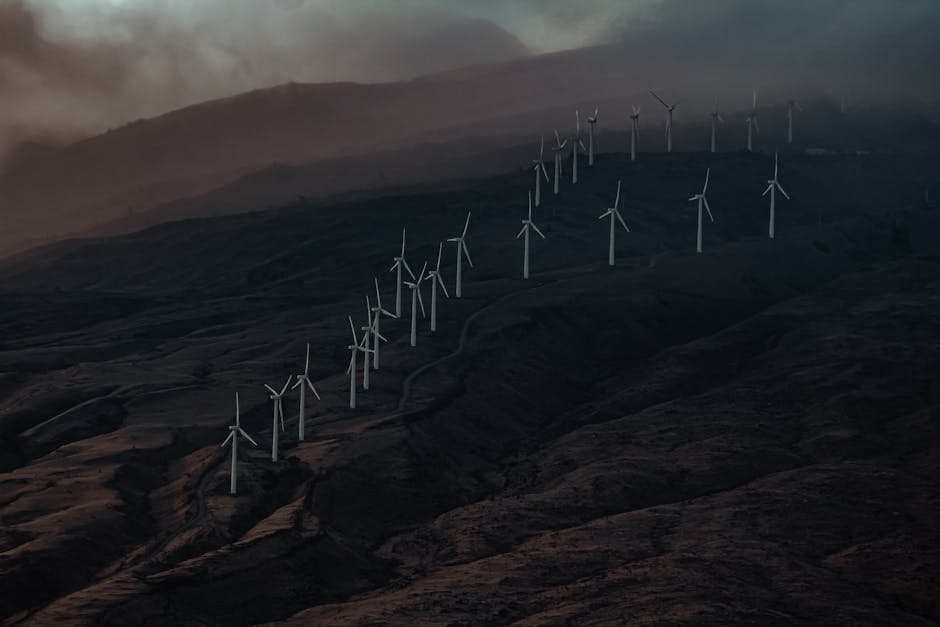 Image: Aerial view of a wind farm with turbines on a misty mountainside during twilight.
Optimizing Pre-, During-, and Post-Activity Nutrition for Peak Performance
Strategic nutrition is essential for maximizing performance and recovery.
- Pre-activity: Consume a carbohydrate-rich meal 2-3 hours before activity. Examples include oatmeal with fruit and nuts or whole-wheat pasta with vegetables.
- During activity: Consume easily digestible carbohydrates every 30-60 minutes. Options include energy gels, fruit, or homemade energy bars.
- Post-activity: Replenish glycogen stores and repair muscle tissue with a combination of carbohydrates and protein within 30-60 minutes of finishing. Examples include a protein shake with fruit or a chicken and vegetable stir-fry.
Hydration Strategies: Minimizing Plastic Waste and Utilizing Water Purification Methods
Proper hydration is crucial, but single-use plastic water bottles contribute significantly to waste.
- Use a reusable water bottle or hydration reservoir: Avoid single-use plastic bottles.
- Carry a water filter or purification tablets: Purify water from natural sources to minimize the need to carry large amounts of water.
- Plan your water sources: Identify reliable water sources along your route and carry enough water to get you between sources.
- Consider a solar-powered water purifier: For extended trips, a solar-powered purifier can provide a sustainable source of clean water.
Expert Tip: A Professional Ski Mountaineer's Daily Nutrition Plan
"My daily nutrition plan focuses on whole, unprocessed foods," says professional ski mountaineer Emily Carter. "For breakfast, I have oatmeal with berries and nuts. During activity, I rely on homemade energy bars made with dates, nuts, and seeds. For dinner, I prioritize lean protein and vegetables, often sourced from local farms. I also carry a reusable water bottle and a lightweight water filter to minimize my reliance on plastic."
Gear and Equipment: Eco-Conscious Choices for the Mountain
Choosing sustainable gear is a critical component of environmentally responsible ski mountaineering. Opt for equipment made from recycled materials, built for durability, and easily repairable to minimize waste.
Sustainable Ski and Binding Manufacturing: Recycled Materials and Responsible Production
 Image: Wind turbines generating power under a clear blue sky with mountains in the background.
Several manufacturers are now prioritizing sustainability in ski and binding production.
- Recycled materials: Look for skis and bindings made with recycled aluminum, plastic, or wood.
- Responsible sourcing: Choose products from companies that prioritize sustainable forestry practices and ethical labor standards.
- Durable construction: Invest in high-quality gear that is built to last, reducing the need for frequent replacements.
- Repairability: Select skis and bindings that are easily repairable, extending their lifespan.
| Feature | Traditional Ski | Sustainable Ski | | ------------------- | ---------------- | --------------- | | Materials | Virgin materials | Recycled/Renewable | | Production Process | Energy intensive | Reduced energy | | Lifespan | Moderate | Longer | | Environmental Impact| High | Lower |
Boots and Apparel: Exploring Eco-Friendly Fabrics and Durable Construction
Sustainable options are increasingly available for ski mountaineering boots and apparel.
- Recycled fabrics: Look for apparel made from recycled polyester or nylon.
- Natural fibers: Consider options made from organic cotton, merino wool, or hemp.
- Durable construction: Invest in high-quality apparel that is built to withstand the rigors of ski mountaineering.
- Waterproof and breathable membranes: Choose membranes that are PFC-free and environmentally friendly.
Backpacks and Safety Gear: Choosing Lightweight and Long-Lasting Options
Backpacks and safety gear are essential for ski mountaineering.
- Lightweight materials: Opt for backpacks made from lightweight and durable materials like recycled nylon.
- Durable construction: Choose a backpack with reinforced stitching and durable zippers.
- Avalanche safety gear: Select avalanche transceivers, shovels, and probes that are lightweight and reliable.
- Consider a solar-powered charger: For extended trips, a solar-powered charger can keep your electronic devices powered.
Avalanche Safety: Prioritizing Renewable Energy Powered Transceivers and Communication Devices
Avalanche safety is paramount in ski mountaineering. Ensure your safety equipment is functioning properly and powered by sustainable energy sources whenever possible.
 Image: Aerial view of suburban homes equipped with solar panels in a sunny neighborhood.
- Regular battery checks: Check the batteries in your avalanche transceiver before each trip.
- Consider rechargeable batteries: Opt for rechargeable batteries for your transceiver and other electronic devices.
- Solar-powered chargers: Use solar-powered chargers to keep your devices powered in the backcountry.
- Satellite communication devices: Consider a satellite communication device for emergencies, ensuring it is fully charged before departure.
Repair and Maintenance: Extending the Lifespan of Your Gear to Reduce Waste
Proper care and maintenance can significantly extend the lifespan of your gear.
- Regular cleaning: Clean your skis, boots, and apparel regularly to remove dirt and grime.
- Proper storage: Store your gear in a dry and well-ventilated area.
- Repair minor damage: Repair small tears, rips, or broken zippers promptly to prevent further damage.
- Sharpen ski edges: Sharpen your ski edges regularly to maintain optimal performance.
- Wax your skis: Wax your skis regularly to improve glide and protect the base.
Real-World Example: A Gear Review Focused on Sustainability and Performance
Product: Patagonia Descensionist Pack
Sustainability Features: Made from 100% recycled nylon, bluesign® approved fabric, Fair Trade Certified™ sewn.
Performance: Lightweight, durable, and comfortable to carry. Ample storage for avalanche safety gear, extra layers, and food.
Review: "The Patagonia Descensionist Pack is a great option for ski mountaineers who prioritize sustainability and performance. The recycled materials and durable construction make it a responsible choice, while the lightweight design and ample storage make it ideal for long days in the backcountry."
Transportation and Logistics: Minimizing Your Carbon Footprint
Transportation to and from trailheads often contributes significantly to the overall carbon footprint of a ski mountaineering trip. Opting for sustainable transportation options and planning efficient routes can help minimize your impact.
 Image: Aerial view of suburban houses featuring solar panels and green lawns, symbolizing eco-friendly living.
Sustainable Transportation Options to Trailheads: Public Transport, Carpooling, and Electric Vehicles
Consider these alternatives to driving alone in a gas-powered vehicle.
- Public transport: Utilize public transport options such as buses or trains to reach trailheads.
- Carpooling: Share a ride with friends or other ski mountaineers to reduce the number of vehicles on the road.
- Electric vehicles: Opt for an electric vehicle for your transportation needs.
- Bike to the trailhead: If feasible, consider biking to the trailhead.
Offsetting Your Carbon Footprint: Investing in Carbon Reduction Projects
Even with sustainable transportation choices, some carbon emissions are unavoidable.
- Calculate your carbon footprint: Use a carbon footprint calculator to estimate the emissions associated with your trip.
- Invest in carbon offset projects: Support projects that reduce greenhouse gas emissions, such as reforestation or renewable energy initiatives.
- Choose reputable carbon offset providers: Ensure that the carbon offset projects you support are verified and effective.
Responsible Travel Practices: Respecting Local Communities and Ecosystems
Responsible travel extends beyond transportation.
- Support local businesses: Patronize local restaurants, shops, and accommodations.
- Respect local customs and traditions: Be mindful of local customs and traditions.
- Minimize your impact on local resources: Conserve water and energy.
- Leave no trace: Pack out all trash and minimize your impact on the environment.
Planning Efficient Routes: Minimizing Travel Time and Fuel Consumption
Careful route planning can reduce travel time and fuel consumption.
 Image: Scenic view of wind turbines generating renewable energy on a mountain in Dikella, Greece.
- Choose trailheads closer to your home: Select trailheads that are easily accessible and minimize driving distance.
- Plan efficient routes: Choose routes that minimize travel time and fuel consumption.
- Utilize online mapping tools: Use online mapping tools to plan your route and identify potential hazards.
- Consider alternative transportation options: Explore options such as biking or hiking to access remote trailheads.
On the Mountain: Leave No Trace Principles and Responsible Practices
Minimizing your impact on the mountain environment is paramount. Adhering to Leave No Trace principles and practicing responsible behavior are essential for preserving the pristine beauty of these areas.
Adhering to Leave No Trace Principles: Pack it In, Pack it Out
The core tenet of responsible backcountry travel.
- Pack out everything you pack in: Carry out all trash, food wrappers, and other waste.
- Leave no trace of your presence: Minimize your impact on the environment.
- Respect wildlife: Observe wildlife from a distance and avoid disturbing their habitats.
- Be considerate of other visitors: Share the trail and be respectful of other users.
Waste Management: Minimizing and Properly Disposing of Trash
Proper waste management is crucial for protecting the environment.
- Minimize packaging: Choose foods with minimal packaging or repackage items in reusable containers.
- Carry a trash bag: Bring a trash bag to collect all trash and waste.
- Properly dispose of human waste: Use a designated restroom or cathole when available.
- Pack out all toilet paper and feminine hygiene products: Do not bury or burn these items.
Respecting Wildlife and Their Habitats: Maintaining a Safe Distance and Avoiding Disturbance
Wildlife is an integral part of the alpine ecosystem.
 Image: Row of wind turbines against blue sky in Weihai, promoting renewable energy.
- Observe wildlife from a distance: Maintain a safe distance and avoid approaching or feeding animals.
- Avoid disturbing nesting sites or dens: Be mindful of wildlife habitats and avoid disturbing them.
- Keep food properly stored: Store food in bear-resistant containers or hang it from a tree to prevent attracting wildlife.
- Pack out all pet waste: Clean up after your pets and dispose of waste properly.
Water Source Protection: Avoiding Contamination and Conserving Water Resources
Protecting water sources is essential for maintaining healthy ecosystems.
- Avoid washing dishes or clothing directly in water sources: Use a biodegradable soap and wash dishes at least 200 feet away from water sources.
- Dispose of human waste properly: Keep human waste away from water sources.
- Conserve water: Use water sparingly and avoid wasting it.
- Respect water rights: Be mindful of water rights and avoid diverting or polluting water sources.
Minimizing Impact on Vegetation: Staying on Established Trails and Avoiding Fragile Areas
Protecting vegetation is crucial for maintaining healthy ecosystems.
- Stay on established trails: Avoid creating new trails or shortcuts.
- Avoid trampling vegetation: Be mindful of where you step and avoid trampling fragile plants.
- Protect riparian areas: Avoid camping or hiking in riparian areas, which are sensitive ecosystems that support a variety of plant and animal life.
- Do not collect firewood: Use a portable stove for cooking and avoid collecting firewood.
FAQ: Addressing Common Questions About Sustainable Ski Mountaineering
Addressing common concerns and misconceptions about sustainable ski mountaineering is essential for promoting its adoption.
Is Sustainable Ski Mountaineering More Expensive?
While some sustainable gear may have a higher upfront cost, it often lasts longer and reduces the need for frequent replacements. Additionally, choosing locally sourced foods and minimizing transportation costs can help offset any additional expenses. Investing in quality, durable gear is often more cost-effective in the long run.
 Image: Line of wind turbines in a desert with mountains, showcasing renewable energy in nature.
How Can I Find Eco-Friendly Gear?
Look for brands that prioritize sustainability in their manufacturing processes and materials. Read product reviews and research company ethics before making a purchase. Certifications such as bluesign®, Fair Trade Certified™, and GOTS (Global Organic Textile Standard) can help you identify eco-friendly products.
What are the Biggest Challenges to Practicing Sustainable Ski Mountaineering?
- Access to sustainable gear: Finding affordable and high-quality sustainable gear can be challenging.
- Convenience: Sustainable choices may require more planning and effort.
- Changing habits: Adopting new habits and routines can be difficult.
- Limited infrastructure: Some backcountry areas may lack infrastructure for sustainable waste management or transportation.
How Can I Encourage Others to Adopt Sustainable Practices?
- Lead by example: Demonstrate your commitment to sustainability through your actions.
- Share your knowledge: Educate others about the benefits of sustainable practices.
- Organize group trips: Plan ski mountaineering trips that emphasize sustainability.
- Support organizations: Donate to organizations that promote sustainable ski mountaineering.
Where Can I Find More Information and Resources?
- Organizations: Protect Our Winters (POW), The Access Fund, Leave No Trace Center for Outdoor Ethics.
- Websites: Backcountry Magazine, Wildsnow.com.
- Books: "Allen & Mike's Really Cool Backcountry Ski Book" by Allen O'Bannon and Mike Clelland.
Can I really make a difference with my choices?
Absolutely! Every sustainable choice, no matter how small, contributes to a larger effort to protect the environment. Collective action is key. Even small changes, when adopted by many, can have a significant impact. According to a study by the University of Michigan, if every ski mountaineer reduced their carbon footprint by just 10%, it would result in a significant reduction in overall emissions.
The Future of Ski Mountaineering: Innovation and Collective Action
The future of ski mountaineering depends on continued innovation and collective action to promote sustainability.
Emerging Technologies in Sustainable Ski Mountaineering
- Bio-based materials: Development of new materials derived from renewable resources.
- Advanced recycling technologies: Improved methods for recycling ski gear and apparel.
- Electric snowmobiles: Electric snowmobiles for accessing remote trailheads.
- Improved solar charging technology: More efficient and portable solar chargers.
The Role of Organizations and Advocacy Groups in Promoting Sustainability
Organizations like Protect Our Winters (POW) and The Access Fund play a crucial role in advocating for sustainable policies and practices. These groups work to raise awareness, educate the public, and lobby for policies that protect the environment and ensure access to backcountry areas.
The Importance of Education and Awareness
Education