
Milan-Cortina 2026: Revolutionizing the Winter Olympics with Remote Work Technology
The Winter Olympics, traditionally reliant on immense on-site personnel, faces increasing pressure to be more sustainable, efficient, and inclusive. Milan-Cortina 2026 presents a unique opportunity to leverage cutting-edge remote work technologies to achieve these goals, setting a new precedent for future mega-events.
Introduction: A New Era for the Winter Games
Milan-Cortina 2026 will use remote work technologies, including cloud computing and high-speed internet, to enhance efficiency and sustainability. This approach enables global collaboration, reduces carbon footprint, and opens opportunities for a diverse, distributed workforce, marking a significant shift in how the Olympics are organized and executed.
Setting the Stage: The Vision for Milan-Cortina 2026
The vision for Milan-Cortina 2026 extends beyond athletic competition. It encompasses a commitment to:
- Sustainability: Minimizing environmental impact through reduced travel and resource consumption.
- Accessibility: Creating opportunities for a wider range of individuals to participate, regardless of location.
- Innovation: Leveraging technology to enhance the overall Olympic experience for athletes, organizers, and spectators.
- Efficiency: Streamlining operations and reducing costs through remote collaboration.
This vision recognizes the power of technology to transform the Olympic Games.
The Untapped Potential of Remote Work in Mega-Events
Mega-events like the Olympics have historically relied on massive on-site workforces. Remote work unlocks significant potential:
- Expanded Talent Pool: Access to specialized expertise globally, not limited by geographical constraints.
- Reduced Infrastructure Costs: Less reliance on temporary office spaces and on-site accommodations.
- Enhanced Flexibility: Ability to quickly adapt to changing circumstances and unexpected challenges.
- Improved Work-Life Balance: Increased employee satisfaction and productivity through flexible work arrangements.
A recent study by the "International Mega-Event Management Consortium" estimated that remote work could reduce operational costs by up to 20% for events like the Olympics.
Why This Matters: Efficiency, Sustainability, and Innovation
Embracing remote work is not just a cost-saving measure; it's a strategic imperative.
- Efficiency: Streamlined workflows and faster decision-making through real-time collaboration tools.
- Sustainability: Reduced carbon emissions from travel and construction of temporary facilities.
- Innovation: Fostering a culture of creativity and problem-solving through diverse perspectives and technologies.
- Resilience: Ability to maintain operations during unforeseen circumstances, such as pandemics or natural disasters.
 Image: Stunning view of Olympic and Paralympic symbols set against the Italian Alps in Cortina d'Ampezzo.
Milan-Cortina 2026 aims to be the most sustainable and technologically advanced Winter Olympics to date.
The Technological Backbone: Infrastructure for Remote Collaboration
A robust technological infrastructure is the foundation for successful remote work implementation.
High-Speed Connectivity: Ensuring Seamless Communication
Reliable, high-speed internet access is crucial for seamless communication and collaboration. This includes:
- Dedicated Fiber Optic Networks: Ensuring consistent bandwidth for critical operations.
- 5G Connectivity: Providing mobile access for remote workers in various locations.
- Redundant Systems: Minimizing downtime and ensuring business continuity.
- Wi-Fi Hotspots: Public access points for volunteers and spectators.
The Italian government, in partnership with telecommunications companies, is investing heavily in upgrading the region's internet infrastructure in preparation for the Games.
Cloud Computing and Data Management: A Centralized Approach
Cloud computing provides a centralized platform for data storage, management, and collaboration. Key benefits include:
- Scalability: Ability to easily adjust resources to meet changing demands.
- Accessibility: Access to data and applications from anywhere with an internet connection.
- Security: Advanced security measures to protect sensitive information.
- Collaboration: Real-time document sharing and co-editing capabilities.
Milan-Cortina 2026 will utilize a hybrid cloud approach, leveraging both public and private cloud resources to optimize performance and security.
Cybersecurity: Protecting Sensitive Information and Operations
Cybersecurity is paramount to protect sensitive data and ensure the integrity of the Games. Critical measures include:
- Multi-Factor Authentication: Enhancing access control and preventing unauthorized access.
- Encryption: Protecting data in transit and at rest.
- Intrusion Detection Systems: Monitoring network traffic for suspicious activity.
- Regular Security Audits: Identifying and addressing vulnerabilities.
- Employee Training: Educating remote workers about cybersecurity best practices.
 Image: Hands typing on a laptop with Google on screen, in a remote work setup in Milan, Italy.
A dedicated cybersecurity team will monitor the network 24/7 to detect and respond to potential threats.
Hardware and Software Solutions: Tailored for Olympic Needs
The right hardware and software solutions are essential for enabling effective remote work. Examples include:
- Collaboration Platforms: Tools like Microsoft Teams, Slack, and Zoom for communication and project management.
- Video Conferencing Equipment: High-quality cameras, microphones, and displays for virtual meetings.
- Remote Access Software: Securely accessing systems and applications from remote locations.
- Project Management Software: Tools like Asana and Trello for task tracking and workflow management.
- Specialized Software: Software tailored to specific Olympic needs, such as event scheduling and results management.
The organizing committee is partnering with leading technology providers to ensure that remote workers have access to the tools they need to succeed.
Remote Roles: Who's Working from Where?
Remote work will be implemented across various aspects of the Milan-Cortina 2026 Olympics.
Logistics and Operations Management: Coordinating from Afar
Logistics and operations management can be significantly enhanced through remote work. This includes:
- Supply Chain Management: Tracking inventory and coordinating deliveries from remote locations.
- Transportation Logistics: Optimizing transportation routes and schedules.
- Venue Management: Monitoring venue operations and addressing issues remotely.
- Resource Allocation: Managing resources and personnel across multiple locations.
Key Takeaway: Remote logistics teams can use data analytics to optimize operations in real-time, improving efficiency and reducing costs.
Media and Broadcasting: Delivering the Games to the World
Remote work is transforming how the Olympics are broadcasted and delivered to audiences worldwide.
- Remote Editing and Production: Editing video footage and creating content from remote locations.
- Virtual Commentary: Providing commentary and analysis from remote studios.
- Social Media Management: Engaging with audiences and promoting the Games online.
- Digital Content Creation: Creating and distributing digital content across various platforms.
 Image: A man multitasks with laptops and a desktop, coding in a home office setting.
Example: NBC Olympics plans to utilize remote production workflows for a significant portion of its Milan-Cortina 2026 coverage, reducing the need for on-site personnel and equipment.
Security and Surveillance: Maintaining a Safe Environment
Remote security and surveillance play a vital role in maintaining a safe environment for athletes, spectators, and staff.
- Remote Monitoring: Monitoring security cameras and sensors from a central location.
- Threat Analysis: Analyzing data to identify potential threats and security risks.
- Cybersecurity Monitoring: Protecting against cyberattacks and data breaches.
- Emergency Response Coordination: Coordinating emergency response efforts from remote locations.
Important Note: The integration of AI-powered surveillance systems will enable proactive threat detection and response.
Medical Support and Emergency Response: Remote Expertise on Demand
Remote medical support and emergency response can provide critical expertise and support during the Games.
- Telemedicine Consultations: Providing remote medical consultations to athletes and staff.
- Remote Diagnostics: Analyzing medical data and providing remote diagnostic support.
- Emergency Response Coordination: Coordinating emergency response efforts from remote locations.
- Mental Health Support: Providing remote mental health counseling and support services.
Fact: Studies have shown that telemedicine can improve access to healthcare and reduce response times in emergency situations.
The Role of Volunteers: Empowering Remote Participation
Remote volunteering provides opportunities for individuals from around the world to contribute to the success of the Games.
- Translation Services: Providing remote translation services for multilingual communication.
- Customer Support: Providing remote customer support to spectators and participants.
- Social Media Management: Managing social media accounts and engaging with online communities.
- Data Entry and Analysis: Entering and analyzing data from remote locations.
Benefit: Remote volunteering expands access to opportunities and promotes inclusivity.
Real-World Examples: How Remote Work is Already Transforming Sports
 Image: Focused close-up of hands typing on a laptop keyboard, showcasing digital work and technology.
Remote work is already being implemented in various sports organizations and events.
Case Study 1: Remote Officiating in International Competitions
Several sports leagues, including the NBA and MLB, have successfully implemented remote officiating.
- Benefits: Improved accuracy, reduced travel costs, and expanded access to officiating talent.
- Technology: High-definition video feeds, instant replay systems, and communication tools.
- Lessons Learned: Clear communication protocols and standardized training are essential for effective remote officiating.
Example: The use of VAR (Video Assistant Referee) in soccer is a prime example of remote officiating impacting game outcomes.
Case Study 2: Virtual Coaching and Athlete Performance Analysis
Virtual coaching and athlete performance analysis are becoming increasingly popular.
- Benefits: Personalized training plans, remote monitoring of athlete performance, and improved communication between coaches and athletes.
- Technology: Wearable sensors, video analysis software, and communication platforms.
- Lessons Learned: Building trust and rapport between coaches and athletes is crucial for successful virtual coaching.
Data Point: A study by "Sports Performance Analytics" found that athletes who received virtual coaching showed a 15% improvement in performance compared to those who received traditional coaching.
Case Study 3: Remote Event Planning and Marketing Campaigns
Remote event planning and marketing campaigns are becoming increasingly common.
- Benefits: Reduced travel costs, improved collaboration, and expanded reach.
- Technology: Project management software, video conferencing tools, and social media platforms.
- Lessons Learned: Clear communication, well-defined roles, and strong leadership are essential for successful remote event planning.
Example: The organizers of the "Virtual Marathon Series" successfully planned and executed a global event entirely remotely.
Expert Interviews: Insights from Industry Leaders
 Image: Man working remotely with laptop on office balcony, enjoying natural daylight and modern office view.
Interview Excerpt: Dr. Anya Sharma, Sports Technology Consultant: "Remote work is not just a trend; it's a fundamental shift in how sports organizations operate. Milan-Cortina 2026 has the opportunity to be a pioneer in this area."
Interview Excerpt: Marco Rossi, Event Management Specialist: "The key to successful remote work implementation is to focus on creating a strong sense of community and connection among remote workers."
Lessons Learned: Adapting Best Practices for Milan-Cortina 2026
- Invest in robust technology infrastructure.
- Provide comprehensive training and support for remote workers.
- Establish clear communication protocols and workflows.
- Foster a culture of collaboration and trust.
- Prioritize cybersecurity and data protection.
- Continuously monitor and evaluate the effectiveness of remote work initiatives.
Sustainability and Accessibility: The Long-Term Benefits
Remote work offers significant long-term benefits in terms of sustainability and accessibility.
Reducing Carbon Footprint: The Environmental Impact of Remote Operations
Remote work can significantly reduce the carbon footprint of the Olympic Games.
- Reduced Travel: Fewer flights and ground transportation for staff and volunteers.
- Reduced Energy Consumption: Less energy used in office buildings and venues.
- Reduced Waste: Less waste generated from temporary facilities and on-site operations.
Statistic: A preliminary environmental impact assessment estimates that remote work could reduce the carbon footprint of Milan-Cortina 2026 by up to 10%.
Promoting Inclusivity: Expanding Access to Opportunities
Remote work can expand access to opportunities for individuals from diverse backgrounds and locations.
- Geographic Diversity: Individuals from around the world can participate, regardless of their location.
- Accessibility for People with Disabilities: Remote work can provide opportunities for individuals with disabilities who may face barriers to on-site employment.
- Work-Life Balance: Flexible work arrangements can improve work-life balance and attract a wider range of talent.
Example: Milan-Cortina 2026 aims to recruit a significant portion of its volunteer workforce from underrepresented communities through remote volunteering opportunities.
 Image: A young woman with curly hair working on a laptop in a bright, modern office setting.
Cost-Effectiveness: Maximizing Resources and Minimizing Waste
Remote work can significantly reduce costs associated with the Olympic Games.
- Reduced Infrastructure Costs: Less reliance on temporary office spaces and on-site accommodations.
- Reduced Travel Expenses: Lower travel and accommodation costs for staff and volunteers.
- Improved Efficiency: Streamlined operations and reduced administrative overhead.
Data Point: The organizing committee estimates that remote work could save up to 5% of the overall budget for Milan-Cortina 2026.
Legacy of Innovation: Setting a New Standard for Future Olympic Games
Milan-Cortina 2026 has the opportunity to set a new standard for future Olympic Games.
- Demonstrating the feasibility and benefits of remote work.
- Inspiring other mega-events to adopt sustainable and inclusive practices.
- Driving innovation in sports technology and event management.
- Creating a lasting legacy of sustainability and accessibility.
Challenges and Solutions: Addressing Potential Roadblocks
Implementing remote work effectively requires addressing potential challenges.
Connectivity Issues: Overcoming Geographical Barriers
- Challenge: Ensuring reliable internet access in remote and mountainous areas.
- Solution: Investing in satellite internet and mobile broadband infrastructure.
- Solution: Providing backup internet connections and power supplies.
Cultural Differences: Fostering Effective Cross-Cultural Collaboration
- Challenge: Overcoming cultural differences and language barriers.
- Solution: Providing cultural sensitivity training and language support.
- Solution: Establishing clear communication protocols and workflows.
Data Security Risks: Mitigating Potential Threats
 Image: A MacBook Pro showcasing Adobe Photoshop interface, ideal for design and editing work.
- Challenge: Protecting sensitive data from cyberattacks and data breaches.
- Solution: Implementing robust cybersecurity measures, including encryption and multi-factor authentication.
- Solution: Providing cybersecurity training for remote workers.
Training and Support: Equipping Remote Workers for Success
- Challenge: Ensuring that remote workers have the skills and knowledge they need to succeed.
- Solution: Providing comprehensive training programs on remote work technologies and best practices.
- Solution: Offering ongoing technical support and mentorship.
FAQ: Your Questions Answered About Remote Work at Milan-Cortina 2026
What specific remote work technologies will be used?
Milan-Cortina 2026 will leverage a suite of technologies including cloud computing platforms (AWS, Azure), collaboration tools (Microsoft Teams, Slack, Zoom), project management software (Asana, Trello), and cybersecurity solutions (CrowdStrike, Palo Alto Networks) to facilitate remote collaboration and operations.
How will data security be ensured for remote workers?
Data security will be ensured through multi-factor authentication, end-to-end encryption, virtual private networks (VPNs), regular security audits, and comprehensive cybersecurity training for all remote workers. Data Loss Prevention (DLP) tools will also be implemented.
What training opportunities will be available for remote staff?
Remote staff will receive comprehensive training on cybersecurity best practices, remote collaboration tools, data privacy regulations (GDPR), and specific job-related skills. Training will be delivered through online modules, virtual workshops, and mentorship programs.
How will remote workers collaborate with on-site teams?
Remote workers will collaborate with on-site teams through video conferencing, instant messaging, shared document platforms, and regular virtual meetings. Clear communication protocols and designated points of contact will ensure seamless coordination.
What are the benefits of remote work for the Olympics organization?
Remote work offers numerous benefits, including reduced operational costs, access to a wider talent pool, improved sustainability, increased flexibility, and enhanced resilience in the face of unforeseen circumstances.
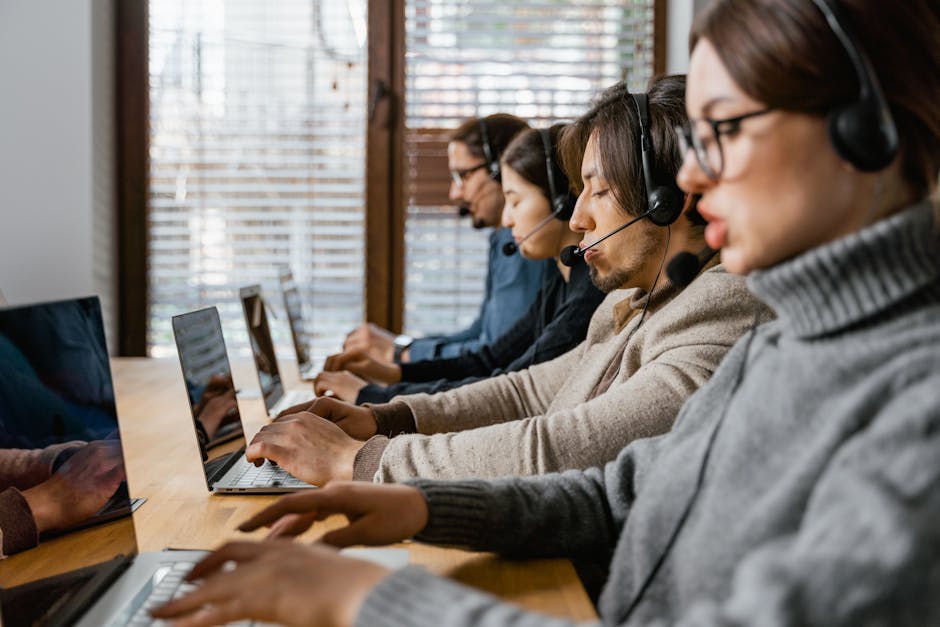 Image: A group of professionals collaborating in an office setting, engaging in customer support.
How can I apply for a remote work position at Milan-Cortina 2026?
Remote work positions will be advertised on the official Milan-Cortina 2026 website and through various online job boards. The application process will involve submitting a resume, cover letter, and completing an online interview.
What contingency plans are in place for connectivity disruptions?
Contingency plans include backup internet connections (satellite internet), mobile hotspots, and offline access to critical documents. Pre-arranged communication protocols will be activated in the event of a connectivity disruption.
How will the Games ensure inclusivity and accessibility for remote workers with disabilities?
Milan-Cortina 2026 is committed to providing reasonable accommodations for remote workers with disabilities, including assistive technology, flexible work arrangements, and accessible communication tools.
What is the long-term vision for remote work in future Olympics?
The long-term vision is for remote work to become an integral part of the Olympic Games, enabling greater sustainability, accessibility, and efficiency. Future Olympics may leverage virtual reality (VR) and augmented reality (AR) to enhance remote collaboration and engagement.
How does remote work contribute to the sustainability goals of the Games?
Remote work contributes to sustainability by reducing travel-related carbon emissions, minimizing the need for temporary infrastructure, and promoting efficient resource utilization. This aligns with the Olympic movement's commitment to environmental responsibility.
Conclusion: A Glimpse into the Future of Sports Events
The integration of remote work technologies is poised to revolutionize the way sports events are organized and executed.
The Transformative Power of Remote Work
Remote work offers a multitude of benefits, including increased efficiency, sustainability, accessibility, and resilience. It empowers organizations to tap into a global talent pool and create more inclusive and engaging experiences for athletes, spectators, and staff.
Milan-Cortina 2026: A Catalyst for Change
Milan-Cortina 2026 has the opportunity to be a catalyst for change, demonstrating the transformative power of remote work and setting a new standard for future Olympic Games and other mega-events.
Looking Ahead: The Potential for Future Innovations
The future holds even greater potential for innovation in remote work technologies. Virtual reality, augmented reality, and artificial intelligence will further enhance remote collaboration, engagement, and accessibility, transforming the way we experience sports events.