
Fintech Innovation: Smart Automation - Revolutionizing Operations & Driving Growth
The fintech sector is under immense pressure. Rising customer expectations, increasing regulatory scrutiny, and the constant threat of sophisticated fraud demand operational excellence. Smart automation offers a pathway to not only survive but thrive in this challenging environment.
Introduction: The Automation Imperative in Fintech
Fintech is experiencing exponential growth, but this growth is accompanied by significant operational hurdles. Manual processes are slow, error-prone, and costly, hindering scalability and innovation. Smart automation, leveraging technologies like AI and RPA, provides the solution to these challenges, enabling fintech companies to optimize operations, reduce costs, and enhance customer experiences.
The Evolving Landscape of Fintech
Financial technology has rapidly evolved from basic online banking to complex ecosystems encompassing digital payments, lending platforms, investment management tools, and insurance technology. This expansion brings increased complexity in managing data, ensuring compliance, and maintaining security. Agility and adaptability are now paramount for success.
- Digital Payments: Mobile wallets, contactless payments, and cross-border payment solutions.
- Lending Platforms: Peer-to-peer lending, online loan applications, and automated credit scoring.
- Investment Management: Robo-advisors, algorithmic trading, and personalized investment recommendations.
- Insurtech: Digital insurance platforms, personalized policies, and automated claims processing.
Defining Smart Automation in the Fintech Context
Smart automation goes beyond simple task automation. It involves using advanced technologies like artificial intelligence (AI), machine learning (ML), and robotic process automation (RPA) to intelligently automate complex workflows, make data-driven decisions, and adapt to changing conditions. It's about creating self-optimizing systems that learn and improve over time.
Why Automation is No Longer Optional: Key Drivers and Benefits
The competitive landscape demands automation. Fintech companies that fail to embrace these technologies risk falling behind. The primary drivers for automation adoption include increasing efficiency, reducing costs, improving accuracy, and enhancing customer experience.
- Efficiency: Automating repetitive tasks frees up employees to focus on higher-value activities.
- Cost Reduction: Automation reduces labor costs, minimizes errors, and optimizes resource allocation.
- Accuracy: Automated systems eliminate human error, ensuring data integrity and regulatory compliance.
- Customer Experience: Personalized services, instant support, and seamless transactions enhance customer satisfaction.
Setting the Stage: The Scope of This Deep Dive
This guide will explore the key areas where smart automation is transforming fintech operations, providing detailed examples, case studies, and practical advice. We will cover everything from customer onboarding and fraud detection to compliance and payment processing. We'll also address the challenges and considerations associated with implementing these technologies.
Key Areas Where Smart Automation is Transforming Fintech Operations
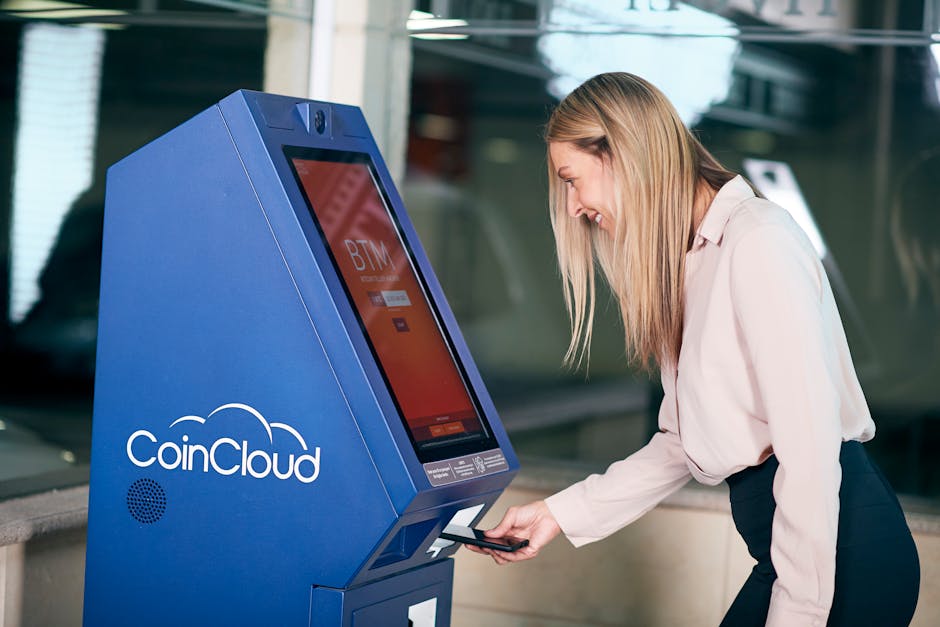 Image: Woman smiling while using a CoinCloud cryptocurrency ATM indoors.
Smart automation is not a one-size-fits-all solution. Its application varies depending on the specific area of fintech operations. Let's examine several key areas where automation is making a significant impact.
Customer Onboarding and KYC (Know Your Customer) Automation
Featured Snippet Answer: Smart automation in fintech streamlines operations by automating KYC/AML processes, enhancing fraud detection, and optimizing payment processing. AI-powered tools verify identities, assess risks, and ensure compliance, reducing costs and improving customer experience. This allows for faster onboarding, improved accuracy, and better risk management, driving growth and innovation in the fintech sector.
Challenges with Traditional KYC Processes
Traditional KYC processes are often manual, time-consuming, and prone to error. They involve collecting and verifying large amounts of documentation, which can be a frustrating experience for customers. This leads to high abandonment rates and increased operational costs.
- Manual Data Entry: Prone to errors and inefficiencies.
- Document Verification Delays: Slows down the onboarding process.
- High Customer Abandonment Rates: Frustrating experience for new users.
- Increased Operational Costs: Labor-intensive and resource-heavy.
AI-Powered Identity Verification and Risk Assessment
AI-powered identity verification solutions use technologies like biometric authentication, facial recognition, and machine learning to automate the KYC process. These solutions can quickly and accurately verify identities, assess risk, and flag suspicious activity, reducing the risk of fraud and improving compliance.
- Biometric Authentication: Uses fingerprints, facial recognition, or voice recognition to verify identities.
- Facial Recognition: Compares a user's selfie to their government-issued ID.
- Machine Learning: Analyzes data to identify patterns and assess risk.
Case Study: Streamlining Onboarding with Automated ID Verification
Fintech startup "VerifyMe" implemented an AI-powered ID verification solution that reduced their onboarding time by 75% and decreased fraud by 40%. The solution automatically verifies government-issued IDs, performs background checks, and assesses risk, allowing VerifyMe to onboard new customers quickly and securely. This resulted in a 20% increase in customer acquisition.
Fraud Detection and Prevention
The financial sector is a prime target for fraudsters. Automation and AI are crucial weapons in the fight against financial crime.
The Growing Threat of Financial Fraud
 Image: Modern control room with people monitoring large digital displays and computer systems.
Financial fraud is a pervasive and evolving threat, costing the industry billions of dollars annually. Traditional fraud detection methods are often reactive and struggle to keep pace with sophisticated fraud schemes. The rise of digital transactions has created new opportunities for fraudsters to exploit vulnerabilities.
- Account Takeover: Gaining unauthorized access to customer accounts.
- Credit Card Fraud: Unauthorized use of credit card information.
- Identity Theft: Stealing and using someone else's personal information.
- Money Laundering: Concealing the origins of illegally obtained money.
Machine Learning for Real-Time Anomaly Detection
Machine learning algorithms can analyze vast amounts of transaction data in real-time to identify anomalies and suspicious patterns. These algorithms learn from historical data and adapt to new fraud trends, providing a more proactive and effective approach to fraud detection.
- Anomaly Detection: Identifying unusual transactions that deviate from normal patterns.
- Behavioral Analysis: Analyzing customer behavior to detect suspicious activity.
- Predictive Modeling: Using historical data to predict future fraud attempts.
Expert Example: Detecting and Preventing Credit Card Fraud with AI
A major credit card company implemented an AI-powered fraud detection system that analyzes transaction data in real-time. The system uses machine learning algorithms to identify suspicious patterns and flag potentially fraudulent transactions. This resulted in a 30% reduction in credit card fraud losses. The system considers factors like transaction amount, location, time of day, and merchant type to assess the risk of each transaction.
Compliance and Regulatory Reporting
The fintech industry is subject to a complex and ever-changing regulatory landscape. Automation can help fintech companies stay compliant and avoid costly penalties.
Navigating the Complex Regulatory Landscape
Fintech companies must comply with a wide range of regulations, including KYC, AML (Anti-Money Laundering), GDPR (General Data Protection Regulation), and PSD2 (Revised Payment Services Directive). These regulations are complex and require significant resources to implement and maintain.
- KYC (Know Your Customer): Verifying the identity of customers.
- AML (Anti-Money Laundering): Preventing the use of financial systems for illegal activities.
- GDPR (General Data Protection Regulation): Protecting the privacy of personal data.
- PSD2 (Revised Payment Services Directive): Regulating payment services in Europe.
Automated Compliance Checks and Reporting
Automation can streamline compliance processes by automating tasks such as data collection, risk assessment, and reporting. Automated compliance checks can identify potential violations and ensure that all regulatory requirements are met.
 Image: Adult male engineer interacts with a smart touchscreen vending machine in an industrial setting.
- Automated Data Collection: Gathering data from various sources to ensure compliance.
- Automated Risk Assessment: Identifying and assessing potential compliance risks.
- Automated Reporting: Generating reports to demonstrate compliance to regulators.
Ensuring Data Privacy and Security with Automation
Automation can also help fintech companies protect data privacy and security. Automated data encryption, access controls, and security monitoring can prevent data breaches and ensure that sensitive information is protected.
- Data Encryption: Protecting data by converting it into an unreadable format.
- Access Controls: Restricting access to sensitive data to authorized personnel.
- Security Monitoring: Continuously monitoring systems for security threats.
Payment Processing and Reconciliation
Payment processing involves numerous steps, from initiating a transaction to settling funds. Automation can significantly improve the efficiency and accuracy of these processes.
Optimizing Payment Workflows with Automation
Automating payment workflows can reduce manual effort, minimize errors, and speed up transaction processing. This includes automating tasks such as payment initiation, authorization, settlement, and reconciliation.
- Payment Initiation: Automating the process of initiating payments.
- Payment Authorization: Automatically verifying and approving payments.
- Payment Settlement: Automating the transfer of funds between parties.
- Payment Reconciliation: Automatically matching transactions to bank statements.
Reducing Errors and Improving Efficiency in Reconciliation
Reconciling payment transactions can be a time-consuming and error-prone process. Automation can streamline reconciliation by automatically matching transactions to bank statements, identifying discrepancies, and generating reports.
- Automated Matching: Automatically matching transactions to bank statements.
- Discrepancy Identification: Identifying discrepancies between transactions and bank statements.
- Automated Reporting: Generating reports on reconciliation results.
Example: Automated Reconciliation for High-Volume Transactions
A high-volume e-commerce platform implemented an automated reconciliation system that reduced reconciliation time by 80% and decreased reconciliation errors by 90%. The system automatically matches millions of transactions to bank statements, identifies discrepancies, and generates reports, freeing up accounting staff to focus on more strategic tasks.
 Image: An engineer wearing safety glasses operates advanced machinery in a workshop setting.
Loan Origination and Management
Automation is transforming the lending industry by streamlining loan applications, credit scoring, and loan servicing.
Automating Loan Applications and Credit Scoring
Automated loan applications and credit scoring systems can speed up the loan origination process and improve the accuracy of credit decisions. These systems use machine learning algorithms to analyze applicant data, assess creditworthiness, and generate credit scores.
- Automated Data Collection: Automatically collecting applicant data from various sources.
- Automated Credit Scoring: Using machine learning algorithms to assess creditworthiness.
- Automated Loan Approval: Automatically approving or rejecting loan applications based on credit scores and other criteria.
Streamlining Loan Servicing and Collections
Automation can also streamline loan servicing and collections by automating tasks such as payment reminders, late fee calculations, and collection calls. This can reduce operational costs and improve loan performance.
- Automated Payment Reminders: Sending automated payment reminders to borrowers.
- Automated Late Fee Calculations: Automatically calculating late fees for overdue payments.
- Automated Collection Calls: Using automated systems to make collection calls to borrowers.
Case Study: AI-Powered Loan Origination for Small Businesses
Lending platform "FundFast" uses AI to automate loan origination for small businesses. Their system analyzes business data, including bank statements, accounting records, and online reviews, to assess creditworthiness and make loan decisions in minutes. This has resulted in a 50% increase in loan approvals and a 25% reduction in loan defaults.
Customer Service and Support
In the digital age, instant and personalized customer service is essential. AI-powered chatbots and virtual assistants are transforming customer support in the fintech industry.
Chatbots and Virtual Assistants for Instant Support
Chatbots and virtual assistants can provide instant support to customers 24/7, answering common questions, resolving issues, and guiding users through complex processes. This can improve customer satisfaction and reduce the workload on human agents.
 Image: Flat lay of smart home gadgets and a keyboard on vibrant background depicting modern technology.
- 24/7 Availability: Providing support to customers around the clock.
- Instant Responses: Answering customer questions immediately.
- Personalized Support: Tailoring responses to individual customer needs.
Personalizing Customer Interactions with AI
AI can personalize customer interactions by analyzing customer data and tailoring responses to individual needs. This can improve customer engagement and build stronger relationships.
- Data Analysis: Analyzing customer data to understand their preferences and needs.
- Personalized Recommendations: Providing personalized recommendations based on customer data.
- Targeted Communication: Sending targeted messages to individual customers.
Expert Example: Using Chatbots to Improve Customer Satisfaction
A digital bank implemented a chatbot that handles 80% of customer inquiries without human intervention. The chatbot can answer questions about account balances, transaction history, and payment schedules. This has resulted in a 20% increase in customer satisfaction and a 30% reduction in call center volume.
Benefits of Smart Automation in Fintech: A Data-Driven Perspective
The benefits of smart automation extend far beyond simple cost savings. They include significant improvements in efficiency, accuracy, customer experience, and risk management.
Increased Efficiency and Productivity
Automation streamlines workflows, eliminates manual tasks, and frees up employees to focus on higher-value activities. This leads to increased efficiency and productivity across the organization. A study by McKinsey found that automation can increase productivity by up to 40% in some fintech operations.
Reduced Operational Costs
Automation reduces labor costs, minimizes errors, and optimizes resource allocation. This results in significant cost savings for fintech companies. Research from Deloitte indicates that organizations implementing intelligent automation can see cost reductions of 20-60%.
Improved Accuracy and Reduced Errors
Automated systems eliminate human error, ensuring data integrity and regulatory compliance. This reduces the risk of costly mistakes and improves the accuracy of financial reporting. Studies show that automated systems can reduce errors by up to 90% compared to manual processes.
 Image: Man observes and operates advanced industrial machinery behind glass indoors.
Enhanced Customer Experience
Personalized services, instant support, and seamless transactions enhance customer satisfaction. Automation enables fintech companies to provide a more convenient and engaging customer experience. A survey by PwC found that 73% of customers say that a good customer experience is a key factor in their purchasing decisions.
Faster Time to Market for New Products and Services
Automation accelerates the development and deployment of new products and services. This enables fintech companies to respond quickly to changing market demands and gain a competitive advantage. Automation can reduce time to market by up to 50%.
Better Risk Management and Compliance
Automation helps fintech companies stay compliant with regulations and mitigate risks. Automated compliance checks, fraud detection systems, and data security measures can prevent costly penalties and protect sensitive information.
Scalability and Agility
Automation enables fintech companies to scale their operations quickly and easily. Automated systems can handle increasing volumes of transactions and data without requiring significant additional resources. Automation allows businesses to adapt to changing market conditions and customer needs more effectively.
Challenges and Considerations When Implementing Smart Automation
While the benefits of smart automation are significant, implementation is not without its challenges. Fintech companies must carefully consider these challenges and develop a strategic approach to automation.
Data Quality and Integration
Data is the foundation of smart automation. Poor data quality and integration issues can undermine the effectiveness of automated systems. Fintech companies must ensure that their data is accurate, complete, and consistent.
- Data Cleansing: Removing errors and inconsistencies from data.
- Data Standardization: Ensuring that data is in a consistent format.
- Data Integration: Combining data from various sources into a unified view.
Legacy Systems and Infrastructure
 Image: Spacious industrial workshop featuring advanced machinery and organized workstations.
Legacy systems can be a major obstacle to automation. These systems are often outdated, inflexible, and difficult to integrate with modern technologies. Fintech companies may need to modernize their infrastructure to support automation.
- API Integration: Using APIs to connect legacy systems to modern applications.
- Cloud Migration: Moving legacy systems to the cloud to improve scalability and flexibility.
- System Modernization: Replacing outdated systems with modern alternatives.
Skills Gap and Talent Acquisition
Implementing and managing smart automation requires specialized skills. Fintech companies may need to invest in training and development programs to address the skills gap. Attracting and retaining talent with expertise in AI, machine learning, and RPA is crucial.
- Training Programs: Providing training to employees on automation technologies.
- Talent Acquisition: Hiring employees with expertise in AI, machine learning, and RPA.
- Partnerships: Collaborating with universities and research institutions to develop talent.
Security Risks and Data Breaches
Automated systems can be vulnerable to security risks and data breaches. Fintech companies must implement robust security measures to protect their systems and data. This includes data encryption, access controls, and security monitoring.
- Data Encryption: Protecting data by converting it into an unreadable format.
- Access Controls: Restricting access to sensitive data to authorized personnel.
- Security Monitoring: Continuously monitoring systems for security threats.
- Regular Security Audits: Conducting regular audits to identify and address vulnerabilities.
Ethical Considerations and Bias in AI
AI algorithms can be biased if they are trained on biased data. This can lead to unfair or discriminatory outcomes. Fintech companies must ensure that their AI systems are fair, transparent, and accountable.
- Data Diversity: Ensuring that training data is diverse and representative of the population.
- Bias Detection: Identifying and mitigating bias in AI algorithms.
- Transparency: Making AI algorithms transparent and explainable.
- Accountability: Establishing clear lines of accountability for AI decisions.
Regulatory Compliance and Governance
Automated systems must comply with all relevant regulations. Fintech companies must establish clear governance policies and procedures to ensure compliance and manage risk.
- Compliance Policies: Establishing policies to ensure compliance with regulations.
- Governance Procedures: Implementing procedures to manage risk and ensure accountability.
- Regular Audits: Conducting regular audits to ensure compliance.
 Image: Two autonomous delivery robots navigate an outdoor space, showcasing modern technology and innovation.
Future Trends in Fintech Automation
The future of fintech automation is bright. Emerging technologies like hyperautomation, blockchain, and low-code/no-code platforms are poised to further transform the industry.
Hyperautomation: Combining Multiple Automation Technologies
Hyperautomation involves combining multiple automation technologies, such as RPA, AI, and machine learning, to automate end-to-end business processes. This enables fintech companies to automate complex workflows and achieve greater efficiency.
Robotic Process Automation (RPA) Evolution
RPA is evolving from simple task automation to more intelligent automation. AI-powered RPA can handle more complex tasks, such as document processing and decision-making.
AI-Powered Decision Making and Prediction
AI is increasingly being used to make data-driven decisions and predictions in fintech. This includes credit scoring, fraud detection, and investment management.
Blockchain and Decentralized Automation
Blockchain technology can be used to automate processes in a decentralized and secure manner. This includes smart contracts, which can automatically execute agreements when certain conditions are met.
The Rise of Low-Code/No-Code Automation Platforms
Low-code/no-code automation platforms make it easier for non-technical users to build and deploy automated solutions. This democratizes automation and empowers citizen developers to create their own solutions.