
Empowering Women in Sustainable Tech: A Deep Dive for International Women's Day 2026
The climate crisis demands urgent action. Ignoring the potential of half the population – women – is not only unjust but also strategically unsound. This International Women's Day 2026, we examine the critical role of women in sustainable tech and how to dismantle the barriers hindering their progress.
Introduction: The Imperative of Female Leadership in Sustainable Tech
Sustainable technology is no longer a niche sector; it's the future of our planet. Solutions to pressing environmental challenges require diverse perspectives, innovative thinking, and collaborative leadership. Women are uniquely positioned to drive this change, bringing empathy, problem-solving skills, and a long-term vision to the forefront of sustainable innovation.
Why Women's Voices are Crucial for a Sustainable Future
Women are disproportionately affected by climate change impacts globally. Their lived experiences often provide unique insights into vulnerabilities and potential solutions at the community level. Furthermore, studies show that companies with greater gender diversity are more likely to adopt sustainable business practices and achieve better ESG performance.
Celebrating International Women's Day 2026: A Call to Action
International Women's Day 2026 is an opportunity to reflect on the progress made and the work that remains. This year's theme, "Innovation for a Sustainable Tomorrow," underscores the vital need to amplify women's voices in sustainable tech. We must collectively commit to creating a more equitable and inclusive environment where women can thrive and lead the charge towards a greener future.
Defining Sustainable Tech: Beyond Greenwashing
Sustainable tech encompasses technologies and innovations designed to minimize environmental impact, promote resource efficiency, and contribute to a circular economy. It goes beyond surface-level "greenwashing" and requires a holistic approach that considers the entire lifecycle of products and services. Key areas include renewable energy, smart grids, circular economy solutions, sustainable agriculture, and green building technologies.
 Image: Two women using a mobile app for bike sharing in an urban park in Mexico City.
The Current Landscape: Women's Representation in Sustainable Technology
Empowering Women in Sustainable Tech: Happy Women's Day 2026! Women are underrepresented in sustainable technology despite its vital role in combating climate change. Addressing this disparity requires systemic changes, including promoting STEM education for girls, providing mentorship opportunities, and increasing access to funding for female-led startups. Creating inclusive workplaces is also crucial.
Statistics: Examining Gender Disparity in Key Sustainable Tech Sectors (Renewable Energy, Circular Economy, etc.)
Despite making up roughly half the global population, women hold only 28% of STEM jobs, according to a 2025 report by the UN Sustainable Development Solutions Network. This disparity is even more pronounced in leadership positions within sustainable tech companies.
- Renewable Energy: Women comprise only 32% of the renewable energy workforce, according to the International Renewable Energy Agency (IRENA).
- Circular Economy: A 2024 study by the Ellen MacArthur Foundation found that only 25% of circular economy startups have a female founder.
- Green Building: Women represent approximately 30% of the green building workforce, a figure that has remained relatively stagnant for the past decade, according to the U.S. Green Building Council.
Barriers to Entry and Advancement: Identifying Systemic Challenges
Several systemic challenges contribute to the underrepresentation of women in sustainable tech. These barriers need to be actively addressed to create a more equitable and inclusive environment.
- Lack of STEM Education and Role Models: Girls are often discouraged from pursuing STEM fields due to societal biases and a lack of visible female role models.
- Gender Bias in Hiring and Promotion: Unconscious biases can lead to women being overlooked for jobs and promotions, especially in male-dominated industries.
- Limited Access to Funding: Female founders often face challenges securing funding from venture capitalists, who tend to invest in startups led by men.
- Work-Life Balance Challenges: The demands of balancing work and family responsibilities can disproportionately affect women, leading to career attrition.
- Lack of Mentorship and Networking Opportunities: Women may lack access to the same mentorship and networking opportunities as their male counterparts.
Spotlight on Organizations Championing Women in Sustainable Tech
 Image: Senior woman crafting traditional art outdoors, showcasing cultural heritage.
Numerous organizations are working to promote gender equality in sustainable tech. These organizations provide valuable resources, mentorship, and networking opportunities for women in the field.
- Women in Cleantech & Sustainability: A global network dedicated to advancing women's leadership in cleantech and sustainability.
- GreenBiz: An organization providing news, events, and resources related to sustainable business practices.
- SheEO: A global community of radically generous women transforming the landscape of women-led ventures.
- The Energy Coalition: Focuses on building diversity in the energy sector.
Expert Perspectives: Real-World Examples of Women Leading the Charge
The following case studies showcase the achievements of women who are making significant contributions to sustainable tech. Their stories offer valuable insights and inspiration for aspiring female leaders.
Case Study 1: Dr. Anya Sharma - Overcoming Obstacles and Driving Innovation in Solar Energy
Dr. Anya Sharma is the Chief Technology Officer of Solaris Innovations, a company developing next-generation solar panels. She faced significant challenges early in her career, including gender bias in the engineering field and limited access to funding for her research. Despite these obstacles, Dr. Sharma persevered and has become a leading expert in solar energy technology. Her innovative research has led to significant advancements in panel efficiency and cost reduction, making solar energy more accessible to underserved communities.
Key Takeaway: Resilience and a strong belief in one's vision are crucial for overcoming obstacles in a male-dominated field.
Case Study 2: Maria Rodriguez - Building a Sustainable Startup from the Ground Up
Maria Rodriguez is the founder and CEO of Circular Solutions, a startup that develops innovative solutions for reducing waste and promoting a circular economy. Maria identified a gap in the market for sustainable packaging solutions and launched her company with a small seed investment. She faced challenges in scaling her business due to limited access to capital and a lack of mentorship. However, through hard work and dedication, Maria has built a successful company that is making a positive impact on the environment. In 2025, her company diverted over 500 tons of waste from landfills.
 Image: A woman hand-paints traditional crafts at an outdoor market, showcasing vibrant ethnic designs.
Key Takeaway: Identifying a market need and building a strong team are essential for launching a successful sustainable startup.
Case Study 3: Jennifer Lee - Leading Policy Changes for a Greener Future
Jennifer Lee is the Director of Environmental Policy at a leading environmental advocacy organization. Jennifer has been instrumental in advocating for policies that promote renewable energy, reduce carbon emissions, and protect natural resources. She has successfully lobbied for the passage of several landmark environmental laws. Her work has helped to create a more sustainable and equitable future for all.
Key Takeaway: Policy advocacy is crucial for driving systemic change and creating a more sustainable future.
Key Takeaways from Expert Interviews: Lessons Learned and Actionable Insights
Interviews with leading women in sustainable tech reveal several key lessons and actionable insights:
- Embrace Failure: Don't be afraid to take risks and learn from your mistakes. Innovation often involves experimentation and setbacks.
- Build a Strong Network: Surround yourself with supportive mentors, peers, and allies who can provide guidance and encouragement.
- Advocate for Yourself: Don't be afraid to speak up and assert your value in the workplace.
- Focus on Impact: Prioritize projects and initiatives that have a positive impact on the environment and society.
- Be a Role Model: Inspire and mentor other women to pursue careers in sustainable tech.
Strategies for Empowering Women in Sustainable Tech
Creating a more equitable and inclusive environment for women in sustainable tech requires a multi-faceted approach. The following strategies can help to address the systemic challenges and empower women to thrive in the field.
 Image: Elderly woman selling colorful traditional handicrafts at an outdoor market.
Education and Training: Addressing the Skills Gap
Providing access to quality education and training in STEM fields is crucial for empowering women to pursue careers in sustainable tech. This includes:
- Investing in STEM Education for Girls: Supporting programs that encourage girls to pursue STEM subjects from an early age.
- Providing Scholarships and Fellowships: Offering financial assistance to women pursuing degrees in sustainable tech-related fields.
- Developing Specialized Training Programs: Creating training programs that focus on specific skills needed in the sustainable tech sector, such as data analytics, renewable energy engineering, and circular economy design.
- Promoting Lifelong Learning: Encouraging women to continuously update their skills and knowledge through online courses, workshops, and conferences.
Mentorship and Networking: Building Supportive Communities
Mentorship and networking opportunities are essential for providing women with guidance, support, and connections in the sustainable tech industry.
- Establishing Mentorship Programs: Pairing women with experienced professionals who can provide career advice and support.
- Creating Networking Events: Organizing events that bring together women in sustainable tech to connect, share ideas, and build relationships.
- Supporting Women-Led Organizations: Providing funding and resources to organizations that support women in sustainable tech.
- Utilizing Online Platforms: Creating online communities where women can connect, share resources, and support each other.
Funding and Investment: Increasing Access to Capital for Female Founders
Female founders often face challenges securing funding from venture capitalists. Addressing this disparity is crucial for supporting women-led sustainable tech startups.
- Promoting Gender Lens Investing: Encouraging investors to consider gender equality when making investment decisions.
- Creating Funding Programs for Women-Led Startups: Establishing grant programs and venture capital funds that specifically target women-led sustainable tech startups.
- Providing Access to Angel Investors: Connecting female founders with angel investors who are interested in supporting women-led businesses.
- Offering Business Training and Support: Providing women entrepreneurs with the training and resources they need to develop successful business plans and secure funding.
 Image: Four women browsing clothes and items at an indoor swap party, focused on sustainable living.
Policy Advocacy: Promoting Gender Equality in Green Initiatives
Policy advocacy is essential for creating a more equitable and inclusive environment for women in sustainable tech.
- Advocating for Gender Equality in Environmental Policies: Ensuring that environmental policies consider the needs and perspectives of women.
- Promoting Diversity and Inclusion in Green Initiatives: Encouraging government agencies and organizations to prioritize diversity and inclusion in their green initiatives.
- Supporting Legislation that Promotes Women's Economic Empowerment: Advocating for policies that support women's economic empowerment, such as paid family leave and affordable childcare.
- Lobbying for Increased Funding for Women-Led Sustainable Tech Businesses: Advocating for increased government funding for programs that support women-led sustainable tech businesses.
Creating Inclusive Workplaces: Fostering a Culture of Belonging
Creating inclusive workplaces is crucial for attracting and retaining women in sustainable tech. This includes:
- Implementing Diversity and Inclusion Training: Providing training to employees on unconscious bias and creating a more inclusive workplace culture.
- Establishing Employee Resource Groups: Creating employee resource groups for women to connect, share experiences, and support each other.
- Offering Flexible Work Arrangements: Providing flexible work arrangements, such as telecommuting and flexible hours, to help employees balance work and family responsibilities.
- Promoting Equal Pay: Ensuring that women are paid equally to men for equal work.
- Creating a Culture of Respect: Fostering a culture of respect and inclusivity where all employees feel valued and supported.
The Future of Sustainable Tech: A Vision of Gender Equality
The future of sustainable tech hinges on the full and equal participation of women. By breaking down barriers and empowering women to lead, we can unlock a new era of innovation and create a more sustainable and equitable future for all.
Predictions for 2030: How Women Will Shape the Sustainable Tech Landscape
 Image: Three women sharing smiles and conversations during a podcast recording in a cozy studio setting.
By 2030, women will play a pivotal role in shaping the sustainable tech landscape.
- Increased Representation in Leadership Roles: Women will hold a significantly greater percentage of leadership positions in sustainable tech companies and organizations. We predict a 45% representation in executive roles.
- Growth of Women-Led Sustainable Startups: The number of women-led sustainable startups will increase exponentially, driven by increased access to funding and mentorship.
- Greater Focus on Social Impact: Women will drive a greater focus on social impact within the sustainable tech sector, prioritizing solutions that address the needs of marginalized communities.
- More Inclusive and Equitable Workplaces: Sustainable tech companies will be more inclusive and equitable, attracting and retaining a diverse workforce.
The Role of Technology in Promoting Gender Equality in the Green Sector
Technology can play a crucial role in promoting gender equality in the green sector.
- Online Learning Platforms: Providing access to affordable and accessible online learning platforms that offer training in sustainable tech skills.
- AI-Powered Mentorship Programs: Developing AI-powered mentorship programs that connect women with experienced professionals in the field.
- Data Analytics Tools: Using data analytics tools to identify and address gender bias in hiring and promotion processes.
- Virtual Reality Training Simulations: Creating virtual reality training simulations that allow women to practice their skills in a safe and supportive environment.
Call to Action: How Individuals and Organizations Can Contribute
Everyone has a role to play in empowering women in sustainable tech.
- Individuals: Mentor a young woman interested in STEM, support women-led businesses, and advocate for gender equality in your workplace.
- Organizations: Implement diversity and inclusion training, offer flexible work arrangements, and invest in women-led sustainable tech startups.
- Investors: Prioritize gender lens investing and provide funding to women-led sustainable tech businesses.
- Policymakers: Advocate for policies that promote gender equality in environmental initiatives and support women's economic empowerment.
FAQ: Addressing Common Questions and Concerns
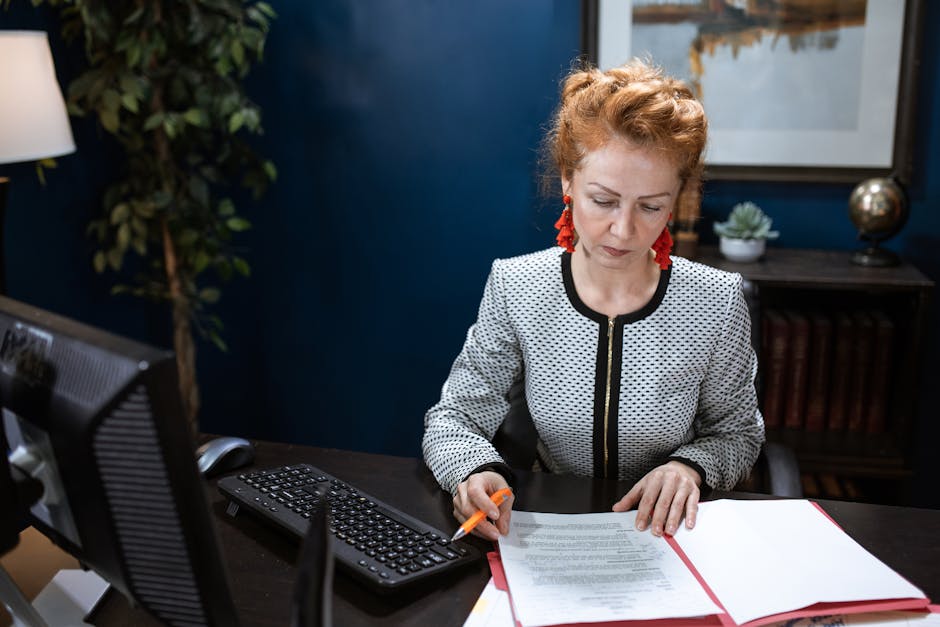 Image: A focused woman working on paperwork in a modern office environment.
This section addresses some frequently asked questions about empowering women in sustainable tech.
What specific skills are most valuable in sustainable tech?
Valuable skills include data analytics, renewable energy engineering, circular economy design, software development, and project management. A strong understanding of ESG principles is also highly beneficial.
How can I find mentorship opportunities in this field?
Organizations like Women in Cleantech & Sustainability, and online platforms such as LinkedIn, offer mentorship programs and networking opportunities. Reach out to professionals whose work you admire and ask if they would be willing to mentor you.
What are some funding resources specifically for women-led sustainable tech startups?
SheEO, Springboard Enterprises, and numerous angel investor networks specifically target women-led startups. Explore grant opportunities from organizations like the Small Business Administration (SBA) and the Department of Energy (DOE).
How can companies create more inclusive workplaces for women in tech?
Companies can implement diversity and inclusion training, establish employee resource groups, offer flexible work arrangements, and promote equal pay. Creating a culture of respect and inclusivity is essential.
 Image: Two women shopping sustainably, enjoying fashion and friendship outdoors.
What are the biggest challenges facing women in sustainable tech today?
The biggest challenges include gender bias in hiring and promotion, limited access to funding, lack of mentorship opportunities, and work-life balance challenges. Societal expectations and a lack of visible role models also contribute to the problem.
Conclusion: Investing in Women, Investing in a Sustainable Future
Empowering women in sustainable tech is not just a matter of fairness; it's a strategic imperative for creating a more sustainable and equitable future. By investing in women, we are investing in innovation, resilience, and a brighter future for all.
Reiterating the Importance of Gender Equality in Sustainable Tech
Gender equality is essential for unlocking the full potential of the sustainable tech sector. Women bring unique perspectives, skills, and experiences that are crucial for developing innovative solutions to the world's most pressing environmental challenges.
A Final Thought for International Women's Day 2026
On International Women's Day 2026, let us reaffirm our commitment to empowering women in sustainable tech. Together, we can create a world where women have equal opportunities to lead, innovate, and shape a more sustainable future.
Resources and Further Reading
- UN Sustainable Development Goals Report 2025
- International Renewable Energy Agency (IRENA) Reports
- Ellen MacArthur Foundation Reports on Circular Economy
- Women in Cleantech & Sustainability Website
- GreenBiz Website
- SheEO Website