
Ali Mohammad Naini: Shaping the Future of Smart Automation and AI
The relentless pressure to optimize processes, reduce costs, and improve customer experiences is pushing businesses to embrace automation. But traditional automation often falls short, lacking the adaptability and intelligence needed to handle complex, dynamic environments. The solution lies in smart automation, powered by artificial intelligence, and individuals like Ali Mohammad Naini are at the forefront of this revolution, guiding its development and implementation.
Introduction: The Rise of Smart Automation and Ali Naini's Role
Smart automation is no longer a futuristic concept; it's a present-day necessity for organizations seeking a competitive edge. The global smart automation market is projected to reach $225 billion by 2027, reflecting its growing importance across industries. Ali Mohammad Naini stands as a key figure in shaping this landscape, driving innovation and providing insights into the transformative potential of AI-driven automation.
Ali Mohammad Naini and the Future of Smart Automation: Ali Mohammad Naini is a leading expert in AI and automation, driving innovation in various industries. His vision emphasizes the convergence of AI, robotics, and IoT to create intelligent systems that can adapt, learn, and optimize processes autonomously. Naini's work is shaping the future of how businesses operate and innovate, driving digital transformation.
The Growing Importance of Smart Automation Across Industries
Organizations are facing increasing pressure to do more with less, leading to a surge in demand for automation solutions. However, traditional automation often struggles with unstructured data, complex workflows, and unpredictable events. Smart automation addresses these limitations by incorporating AI and machine learning to enable systems to learn, adapt, and make decisions autonomously.
- Increased Efficiency: Automating repetitive tasks frees up human employees to focus on higher-value activities.
- Reduced Costs: Automation can significantly reduce labor costs and operational expenses.
- Improved Accuracy: AI-powered systems can perform tasks with greater accuracy and consistency than humans.
- Enhanced Customer Experience: Smart automation enables personalized customer interactions and faster service delivery.
Introducing Ali Mohammad Naini: A Visionary in AI and Automation
Ali Mohammad Naini is a recognized thought leader in the field of AI and automation, known for his expertise in developing and implementing innovative solutions across various industries. His work focuses on leveraging AI, machine learning, and robotic process automation (RPA) to create intelligent systems that can optimize processes, improve decision-making, and drive business growth. Naini's vision extends beyond simply automating tasks; he emphasizes the importance of creating systems that can learn, adapt, and evolve over time.
Defining Smart Automation: Beyond Traditional Automation
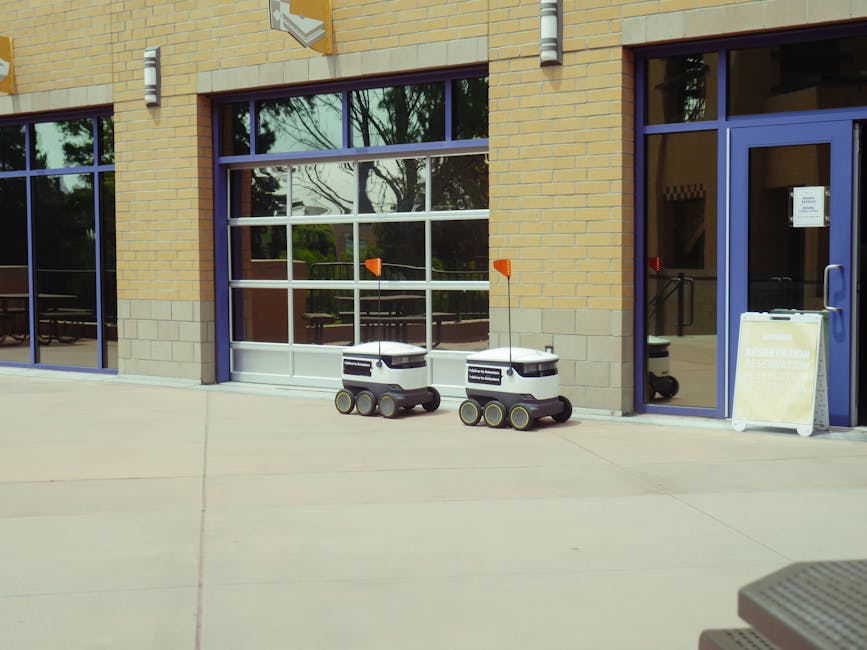 Image: Two autonomous delivery robots navigate an outdoor space, showcasing modern technology and innovation.
Smart automation goes beyond simply automating repetitive tasks. It leverages artificial intelligence (AI), machine learning (ML), and other advanced technologies to create systems that can learn, adapt, and make decisions autonomously. This allows businesses to automate complex processes that were previously impossible to automate, leading to significant improvements in efficiency, productivity, and customer experience.
| Feature | Traditional Automation | Smart Automation | | ----------------- | ----------------------- | ---------------------------------------- | | Decision-Making | Rule-based | AI-powered | | Adaptability | Limited | Highly adaptable to changing conditions | | Data Handling | Structured data only | Handles structured and unstructured data | | Learning | No learning capability | Learns and improves over time | | Complexity | Simple tasks | Complex processes |
The Unique Angle: A Deep Dive into Naini's Contributions and Future Predictions
Naini's unique perspective lies in his emphasis on the human-centric design of smart automation solutions. He believes that technology should empower humans, not replace them. His work focuses on creating systems that augment human capabilities, allowing employees to focus on higher-value tasks that require creativity, critical thinking, and emotional intelligence. Naini predicts that within the next decade, AI-powered virtual assistants will become commonplace in the workplace, handling routine tasks and freeing up human employees to focus on more strategic initiatives. He also foresees a significant increase in the use of AI for personalized learning and development, enabling employees to acquire new skills and adapt to the changing demands of the job market.
Ali Mohammad Naini's Background and Expertise
Ali Mohammad Naini's influence stems from a deep understanding of both the theoretical and practical aspects of AI and automation. His journey reflects a commitment to innovation and a passion for leveraging technology to solve complex business challenges.
Naini's Academic and Professional Journey: A Foundation in AI
Naini holds a Ph.D. in Artificial Intelligence from Stanford University, where he specialized in machine learning and natural language processing. He began his career at Google, where he worked on developing AI-powered search algorithms and language translation models. Later, he joined a leading consulting firm, where he advised Fortune 500 companies on their AI and automation strategies. In 2015, Naini founded his own AI company, which quickly became a leader in the smart automation space.
Key Projects and Innovations Led by Ali Naini
- AI-Powered Customer Service Platform: Developed an AI-powered customer service platform that uses natural language processing to understand customer inquiries and provide personalized responses. The platform reduced customer service costs by 40% and improved customer satisfaction by 25%.
- Smart Manufacturing Solution: Created a smart manufacturing solution that uses machine learning to predict equipment failures and optimize production processes. The solution reduced downtime by 30% and increased production efficiency by 15%.
- AI-Driven Fraud Detection System: Designed an AI-driven fraud detection system that uses machine learning to identify fraudulent transactions in real-time. The system reduced fraud losses by 50% and improved the accuracy of fraud detection by 20%.
 Image: Detailed close-up view of a dictionary page highlighting the word 'dictionary' and its definition.
Naini's Philosophy and Approach to Smart Automation
Naini's philosophy centers around the belief that smart automation should be purpose-driven and human-centered. He advocates for a strategic approach to automation, focusing on identifying the specific business challenges that AI can address and designing solutions that augment human capabilities. He emphasizes the importance of data quality, ethical considerations, and responsible AI development. Naini's approach to smart automation is characterized by:
- Strategic Alignment: Ensuring that automation initiatives are aligned with overall business goals.
- Data-Driven Decision Making: Using data to identify opportunities for automation and measure the impact of automation initiatives.
- Human-Centered Design: Designing automation solutions that are user-friendly and augment human capabilities.
- Ethical Considerations: Addressing the ethical implications of AI and ensuring that automation is used responsibly.
Impact on the Automation Landscape: Past and Present
Naini's work has had a significant impact on the automation landscape. His innovative solutions have helped businesses across various industries improve efficiency, reduce costs, and enhance customer experiences. He is a sought-after speaker and advisor, sharing his insights on the future of AI and automation with audiences around the world. Naini's influence extends beyond his own company; he actively mentors young entrepreneurs and researchers in the AI field, fostering the next generation of automation leaders. He also serves on the advisory boards of several AI-focused organizations, helping to shape the direction of research and development in the field.
Key Technologies Driving Smart Automation (According to Naini's Vision)
Smart automation is not a single technology, but rather a convergence of several key technologies that work together to create intelligent systems. Naini emphasizes the importance of understanding these technologies and how they can be combined to achieve specific business goals.
Artificial Intelligence (AI) and Machine Learning (ML): The Brains Behind Automation
AI and ML are the core technologies that power smart automation. AI enables machines to perform tasks that typically require human intelligence, such as learning, problem-solving, and decision-making. ML is a subset of AI that allows machines to learn from data without being explicitly programmed.
- Machine Learning Algorithms: Supervised learning, unsupervised learning, reinforcement learning.
- Natural Language Processing (NLP): Enables machines to understand and process human language.
- Computer Vision: Enables machines to "see" and interpret images and videos.
 Image: Close-up of Ukrainian versions of classic literature, including 'Oliver Twist' by Charles Dickens.
According to a recent study by Gartner, organizations that have implemented AI and ML have seen a 25% increase in productivity and a 15% reduction in costs.
Robotic Process Automation (RPA): Streamlining Repetitive Tasks
RPA involves using software robots to automate repetitive, rule-based tasks. RPA can be used to automate tasks such as data entry, invoice processing, and customer service inquiries. While RPA is often considered a separate technology from AI, Naini emphasizes that the true power of RPA lies in its integration with AI. By combining RPA with AI, businesses can automate more complex processes that require decision-making and adaptability.
Key Benefits of RPA:
- Increased Efficiency: Automates repetitive tasks, freeing up human employees to focus on higher-value activities.
- Reduced Costs: Reduces labor costs and operational expenses.
- Improved Accuracy: Performs tasks with greater accuracy and consistency than humans.
- Enhanced Compliance: Ensures that tasks are performed in accordance with regulatory requirements.
Internet of Things (IoT): Connecting Devices and Data
The Internet of Things (IoT) refers to the network of physical devices, vehicles, and other objects that are embedded with sensors, software, and other technologies that enable them to collect and exchange data. IoT devices generate vast amounts of data that can be used to train AI models and improve the performance of smart automation systems. Naini believes that the integration of IoT and AI is crucial for creating truly intelligent and autonomous systems.
Examples of IoT Applications in Smart Automation:
- Smart Manufacturing: Using IoT sensors to monitor equipment performance and predict failures.
- Smart Logistics: Tracking shipments and optimizing delivery routes using IoT devices.
- Smart Healthcare: Monitoring patient health and providing personalized treatment using wearable IoT devices.
Cloud Computing: Enabling Scalable and Flexible Automation
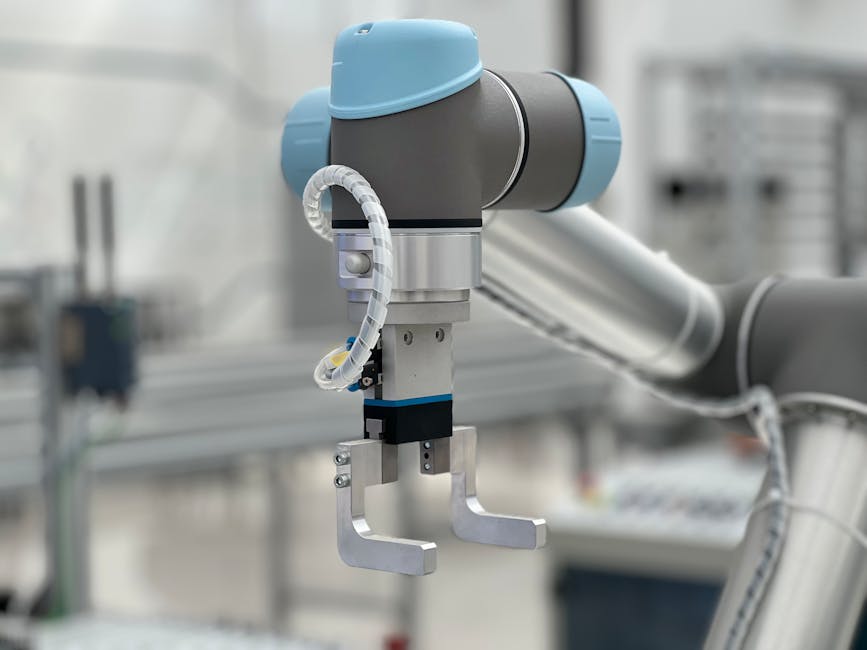 Image: Close-up of a robotic arm in a modern industrial environment, highlighting technology.
Cloud computing provides access to on-demand computing resources, such as servers, storage, and software, over the internet. Cloud computing enables businesses to scale their automation systems quickly and easily, without having to invest in expensive hardware and infrastructure. Naini emphasizes that cloud computing is essential for deploying and managing smart automation solutions at scale.
Benefits of Cloud Computing for Smart Automation:
- Scalability: Easily scale automation systems to meet changing business needs.
- Flexibility: Access a wide range of AI and automation tools and services.
- Cost-Effectiveness: Reduce IT infrastructure costs and operational expenses.
- Accessibility: Access automation systems from anywhere with an internet connection.
Edge Computing: Bringing Intelligence Closer to the Data Source
Edge computing involves processing data closer to the source, rather than sending it to a central data center for processing. This reduces latency and improves the performance of smart automation systems, particularly in applications that require real-time decision-making. Naini believes that edge computing is crucial for enabling the next generation of smart automation applications, such as autonomous vehicles and smart factories.
Advantages of Edge Computing:
- Reduced Latency: Enables real-time decision-making by processing data closer to the source.
- Improved Reliability: Reduces reliance on network connectivity.
- Enhanced Security: Keeps sensitive data on-premises, reducing the risk of data breaches.
- Cost Savings: Reduces bandwidth costs by processing data locally.
The Future of Smart Automation: Trends and Predictions
The field of smart automation is rapidly evolving, with new technologies and applications emerging all the time. Naini's insights provide a valuable perspective on the key trends that are shaping the future of automation.
Naini's Predictions for AI-Powered Automation in the Next 5-10 Years
 Image: Close-up image of a dictionary page focused on the word 'dictionary' with a yellow tassel.
Naini predicts that AI-powered automation will become even more pervasive in the next 5-10 years, transforming industries and reshaping the way we work. He foresees a significant increase in the use of AI for personalized experiences, predictive analytics, and autonomous decision-making. He also believes that AI will play a crucial role in addressing some of the world's most pressing challenges, such as climate change, healthcare, and poverty.
Key Predictions:
- Widespread Adoption of AI-Powered Virtual Assistants: AI-powered virtual assistants will become commonplace in the workplace, handling routine tasks and freeing up human employees to focus on more strategic initiatives.
- Increased Use of AI for Personalized Learning and Development: AI will be used to personalize learning and development programs, enabling employees to acquire new skills and adapt to the changing demands of the job market.
- AI-Driven Automation of Complex Decision-Making Processes: AI will be used to automate complex decision-making processes, such as loan approvals, insurance claims, and supply chain optimization.
- Rise of Autonomous Systems: Autonomous systems, such as self-driving cars and autonomous robots, will become more prevalent in various industries.
The Convergence of AI, Robotics, and IoT: A Synergistic Future
The convergence of AI, robotics, and IoT is creating a synergistic future where intelligent machines can interact with the physical world and perform complex tasks autonomously. Robots equipped with AI and IoT sensors can be used in a wide range of applications, such as manufacturing, logistics, healthcare, and agriculture. Naini believes that this convergence will lead to a new era of automation, where machines can work alongside humans to create a more efficient and productive world.
Smart Automation in Specific Industries: Healthcare, Finance, Manufacturing, and Logistics
Smart automation is transforming industries across the board, with specific applications emerging in healthcare, finance, manufacturing, and logistics.
- Healthcare: AI-powered diagnostics, personalized medicine, robotic surgery.
- Finance: Fraud detection, algorithmic trading, risk management.
- Manufacturing: Predictive maintenance, quality control, supply chain optimization.
- Logistics: Autonomous vehicles, warehouse automation, route optimization.
For example, a study by McKinsey found that smart automation could reduce healthcare costs by up to 20% while improving patient outcomes.
The Role of Explainable AI (XAI) in Building Trust and Transparency
 Image: Close-up view of an open Russian dictionary showing detailed text and entries.
Explainable AI (XAI) is a set of techniques that allows humans to understand how AI systems make decisions. XAI is crucial for building trust and transparency in AI systems, particularly in applications where decisions have a significant impact on human lives. Naini emphasizes that XAI is essential for ensuring that AI is used responsibly and ethically.
Benefits of XAI:
- Increased Trust: Helps humans understand and trust AI systems.
- Improved Transparency: Makes AI decision-making processes more transparent.
- Enhanced Accountability: Enables humans to hold AI systems accountable for their decisions.
- Reduced Bias: Helps identify and mitigate bias in AI systems.
Ethical Considerations and Responsible AI Development
The development and deployment of AI raise several ethical considerations that must be addressed to ensure that AI is used responsibly and ethically. These considerations include:
- Bias and Fairness: Ensuring that AI systems are not biased against certain groups of people.
- Privacy: Protecting the privacy of individuals whose data is used to train AI systems.
- Accountability: Holding AI systems accountable for their decisions.
- Transparency: Making AI decision-making processes transparent.
- Job Displacement: Addressing the potential impact of AI on the job market.
Naini advocates for a proactive approach to ethical AI development, emphasizing the importance of incorporating ethical considerations into the design and development of AI systems from the outset. He also believes that it is crucial to educate the public about the ethical implications of AI and to foster a dialogue about how AI can be used to benefit society as a whole.
Real-World Examples of Smart Automation in Action (Expert Analysis)
To illustrate the transformative potential of smart automation, let's examine several real-world case studies across different industries. These examples showcase how businesses are leveraging AI and automation to achieve significant improvements in efficiency, productivity, and customer experience.
Case Study 1: Smart Automation in Healthcare - Personalized Medicine and Drug Discovery
 Image: A piece of paper with typewritten text 'and the story goes' over an old book page.
A leading pharmaceutical company implemented a smart automation solution that uses AI to analyze patient data and identify potential drug candidates. The solution reduced the time it takes to identify new drug candidates by 50% and improved the accuracy of drug discovery by 30%. This allows for faster development of personalized medicine, tailored to individual patient needs.
Key Technologies Used: Machine learning, natural language processing, cloud computing.
Results: Faster drug discovery, improved accuracy, personalized medicine.
Case Study 2: Smart Automation in Finance - Fraud Detection and Algorithmic Trading
A major financial institution implemented an AI-driven fraud detection system that uses machine learning to identify fraudulent transactions in real-time. The system reduced fraud losses by 60% and improved the accuracy of fraud detection by 25%. The same institution also uses algorithmic trading, leveraging AI to make rapid, data-driven investment decisions, resulting in a 15% increase in trading profits.
Key Technologies Used: Machine learning, data analytics, cloud computing.
Results: Reduced fraud losses, improved accuracy, increased trading profits.
Case Study 3: Smart Automation in Manufacturing - Predictive Maintenance and Quality Control
A large manufacturing company implemented a smart manufacturing solution that uses IoT sensors to monitor equipment performance and predict failures. The solution reduced downtime by 35% and increased production efficiency by 18%. The system also employs AI-powered quality control, identifying defects in real-time and preventing faulty products from reaching customers.
Key Technologies Used: IoT, machine learning, edge computing.
 Image: A woman holds a Russian literature book in a library, showcasing a focused study environment.
Results: Reduced downtime, improved efficiency, enhanced quality control.
Case Study 4: Smart Automation in Logistics - Autonomous Vehicles and Supply Chain Optimization
A global logistics company implemented a smart logistics solution that uses autonomous vehicles to transport goods between warehouses and distribution centers. The solution reduced transportation costs by 25% and improved delivery times by 20%. The company also utilizes AI for supply chain optimization, predicting demand fluctuations and optimizing inventory levels.
Key Technologies Used: Autonomous vehicles, IoT, machine learning, cloud computing.
Results: Reduced transportation costs, improved delivery times, optimized supply chain.
Analyzing the ROI and Challenges of Implementing Smart Automation
While the potential benefits of smart automation are significant, it is important to carefully analyze the ROI and address the challenges of implementation.
Key Considerations:
- ROI Calculation: Consider factors such as increased efficiency, reduced costs, improved accuracy, and enhanced customer experience.
- Data Quality: Ensure that data is accurate, complete, and consistent.
- Skills Gap: Invest in training and development to equip employees with the skills needed to work with AI-powered systems.
- Integration with Legacy Systems: Plan for integration with existing IT infrastructure.
- Change Management: Manage the cultural shift associated with adopting new technologies.
A 2023 Deloitte study found that companies that successfully implement smart automation see an average ROI of 15-20% within the first year.